








In the vast expanse of global trade, the choice of shipping method can significantly impact a business’s bottom line, efficiency, and environmental footprint. With various options such as air, rail, and road transport available, one might wonder: Why Choose Ocean Freight? In this article, we will explore the irreplaceable role, core advantages, and ideal use cases of ocean freight in the modern global logistics system.
I. Introduction: The Blue Artery Connecting the World
Imagine the smartphone in your hand or the clothes you’re wearing. It’s highly likely that these items traveled across an ocean before reaching you. In an era filled with multiple shipping options, the question Why Choose Ocean Freight? becomes increasingly relevant.
Here’s a fact that often goes unnoticed: over 80% of global trade by volume is carried by sea. Ocean freight serves as the “silent backbone” and “blue artery” of the world economy, quietly facilitating the movement of goods on a massive scale.
II. The Top 5 Advantages of Ocean Freight: Unbeatable Strengths
Advantage 1: Unbeatable Cost – Effectiveness
Let’s start with a data – driven comparison. Shipping the same item across the Pacific via ocean freight and air freight can have a significant cost difference. For instance, air freight can cost up to 10 times more per kilogram than ocean freight.
The core principle behind the cost – effectiveness of ocean freight is economies of scale. Giant container ships, such as those in the 24,000 TEU class, can carry tens of thousands of containers. This large – scale transportation drives the per – unit cost extremely low. For non – urgent, large – volume goods, ocean freight is clearly the most economical choice.
Advantage 2: Massive Capacity and Versatility
Container ships are true behemoths of the sea. They have the enormous capacity to transport everything from raw materials like ore and grain to finished goods such as cars and machinery. Specialized vessels also play a crucial role. Bulk carriers are designed to carry large quantities of unpacked bulk cargo like coal and iron ore. RO – RO (Roll – on/Roll – off) ships are ideal for transporting vehicles and wheeled equipment. Tankers are used to transport liquids such as oil and chemicals.
Ocean freight can handle goods that other modes of transport simply cannot. Oversized and heavy equipment, as well as hazardous materials, can be safely and efficiently transported by sea. The container revolution has also been a game – changer. Standardized containers have simplified the handling process, increased security, and enabled efficient intermodal transport, allowing goods to seamlessly transfer between ships, trains, and trucks.
Advantage 3: High Energy Efficiency & Environmental Potential
While the total emissions of the shipping industry are significant, the carbon footprint and energy consumption per tonne of cargo per kilometer for ocean freight are far lower than those of air or road transport. For example, air freight emits approximately 50 times more carbon dioxide per tonne – kilometer than ocean freight.
The shipping industry is also actively involved in a green transition. Initiatives for decarbonization include the use of LNG (liquefied natural gas) as a cleaner – burning fuel, wind – assisted propulsion systems, speed optimization, and the exploration of future zero – carbon fuels like green hydrogen and ammonia.
Advantage 4: Global Network and Reliability
Oceans cover 70% of the earth, and there are ports in virtually every country. This provides ocean freight with an unparalleled global network. Liner shipping services offer fixed routes and relatively predictable sailing schedules. This stability is crucial for supply chain planning, allowing businesses to accurately forecast delivery times and manage their inventory.
Compared to land routes, which may face political instability or complex border crossings, major sea lanes are generally stable and secure. For example, land – based transport in some regions may be disrupted by political unrest, strikes, or strict border regulations, while sea routes remain relatively unaffected.
Advantage 5: An Ideal Environment for Specific Cargo
The relative stability of a ship is beneficial for certain types of cargo. Delicate instruments or large equipment may be better off on a ship, as they are less exposed to the constant vibration of road or rail transport. Refrigerated containers, known as Reefers, can provide a controlled temperature and humidity environment. This is essential for perishables such as food and pharmaceuticals, ensuring that they arrive at their destination in optimal condition.

III. When is Ocean Freight the Best Choice? Ideal Use Cases
Large, Heavy, Low – Value – Weight Ratio Goods
Goods such as furniture, building materials, plastic goods, and textiles are typically large, heavy, and have a low value – weight ratio. Shipping these items by ocean freight is the most cost – effective option, as the high volume and weight make air or road transport prohibitively expensive.
Non – Urgent or Seasonal Inventory
Businesses can take advantage of the low cost of ocean freight to stock up for holiday seasons months in advance. For example, retailers can order large quantities of Christmas decorations or summer clothing well in advance, using ocean freight to transport the goods at a lower cost.
E – commerce and Bulk Traders
E – commerce companies and bulk traders often use ocean freight to restock their overseas fulfillment centers. This is key to achieving fast “local delivery” as it allows them to have a large inventory on hand in the destination country, reducing the time between order placement and delivery.
Project Cargo and Specialized Equipment
Heavy machinery, wind turbine blades, and entire factory relocations fall into the category of project cargo. These large – scale and specialized items require the massive capacity and handling capabilities of ocean freight.
IV. The Other Side of the Coin: Challenges & Considerations
The Obvious Challenge: Longer Transit Times
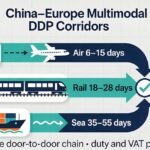
Typical ocean voyages can take a significant amount of time. For example, shipping from China to the US West Coast takes approximately 15 – 20 days, and to the US East Coast via the Panama Canal takes around 25 – 30 days. Transit times can be influenced by various factors such as weather conditions, port congestion, and canal queues.
To mitigate the impact of long transit times, businesses need to adopt an advanced inventory planning strategy and robust supply chain management. This may involve maintaining higher inventory levels, using demand forecasting tools, and having contingency plans in place.
Other Factors to Consider
Customs clearance for ocean freight can be complex. It involves a large amount of documentation and varies according to national customs policies. Different countries have different regulations regarding the import and export of goods, and failure to comply can result in delays and additional costs.
The “door – to – door” chain for ocean freight is also relatively long. It requires coordination with multiple parties, including ports, carriers, and trucking companies. A freight forwarder plays a crucial role in managing this complex process, ensuring that goods are transported smoothly from the origin to the destination.

V. How to Get Started with Ocean Freight: A Simplified Process
Find a Reliable Partner
A freight forwarder is a crucial partner when it comes to ocean freight. They have the expertise and resources to handle all aspects of the shipping process, from documentation to carrier selection. A reliable freight forwarder can help businesses navigate the complexities of ocean freight and ensure a smooth shipping experience.
The Core Steps Simplified
- Get a Quote & Book Space: Provide detailed information about your cargo, such as its weight, volume, and destination. Based on this information, the freight forwarder will provide a freight quote and help you reserve space on a vessel.
- Cargo Pickup & Inland Haulage: The goods need to be moved from their origin to the port of loading. This may involve using trucks or trains for inland haulage.
- Customs Clearance & Loading: Complete all the necessary export formalities, including customs documentation and inspections. Once cleared, the containers are loaded onto the ship.
- Ocean Transit & Tracking: After the ship sets sail, you will receive a Bill of Lading, which is a crucial document for ownership and transfer of the goods. You can also track your shipment in real – time using various tracking systems.
- Destination Clearance & Delivery: Upon arrival at the destination port, the goods need to clear import customs. After that, final delivery to the consignee can be arranged.
VI. Conclusion: The Smart Choice – Balancing Speed and Cost
In summary, ocean freight offers core strengths in terms of cost, capacity, environmental efficiency, and global reach. While it may not be the fastest shipping option, it provides an optimal balance between speed and cost for the vast majority of international trade goods.
With the ongoing digitalization of the shipping industry, including the use of Blockchain and IoT (Internet of Things), and the development of green fuels, ocean freight will continue to play an irreplaceable role in powering globalization. Choosing ocean freight is a strategic decision that can bring long – term benefits to businesses in the global marketplace.