







Introduction: Entering the Global Track – Opportunities and Challenges in Exporting Electric Vehicle Batteries
Industry Wave: The Explosive Growth of the Global Electric Vehicle Industry Spawning Huge Cross – border Logistics Demand for Power Batteries
The booming global electric vehicle industry is driving the growth of cross – border logistics demand for power batteries at an unprecedented rate. In recent years, the global new energy vehicle market has shown explosive growth. Countries around the world have introduced policies to encourage the development of new energy vehicles to reduce dependence on traditional fuel – powered vehicles and cut carbon emissions. According to relevant data, the global sales of new energy vehicles are expected to reach tens of millions in 2025. As the core component of new energy vehicles, the demand for power batteries has also increased significantly.
China, as the world’s largest producer of power batteries, has a complete industrial chain and cost advantages. The quality of its products is constantly improving, and its international competitiveness is increasing day by day. The market share of Chinese lithium – battery enterprises in the global power battery market has been rising. In 2022, five Chinese enterprises, including CATL, BYD, CALB, Gotion High – Tech, and Sunwoda, entered the top ten in the global power battery installed capacity. From January to October 2025, the cumulative export of power and other batteries in China reached 228.1GWh, a year – on – year increase of 43.9%. Among them, the cumulative export of power batteries was 148.5GWh, accounting for 65.1% of the total export volume, with a year – on – year increase of 37.2%.
Specificity: Compared with Consumer Electronics Batteries, Electric Vehicle Batteries (Modules/PACKs) Have Prominent Characteristics of High Energy Value, High Cost, Strict Regulation, and High Sensitivity to Safety
Electric vehicle batteries (modules/PACKs) have obvious specificity compared with consumer electronics batteries. Firstly, electric vehicle batteries have high energy value. They usually need to provide sufficient power support for vehicles, so their capacity and energy density are much higher than those of consumer electronics batteries. Secondly, electric vehicle batteries have a high cost. The price of a set of electric vehicle batteries may account for one – third or even more of the total vehicle price. In addition, since electric vehicle batteries need to withstand large currents and voltages during use and generate heat during charging and discharging, their safety performance requirements are extremely high, and the regulation is also more stringent.
The Value of This Article: To Provide a Panoramic and Practical Export Transport Roadmap from the Factory to the End for Automakers, Battery Manufacturers, and Logistics Service Providers
This article aims to provide automakers, battery manufacturers, and logistics service providers with a comprehensive and detailed guide to the entire process of exporting electric vehicle batteries. By in – depth interpretation of the key steps, core risks, and compliance strategies in exporting electric vehicle batteries, this article helps practitioners understand all aspects of exporting electric vehicle batteries, master relevant regulatory requirements and operational points, thereby reducing export risks, improving export efficiency, and ensuring the safety, compliance, and smooth progress of exporting electric vehicle batteries.
Step 1: Strategic Preparation and Compliance Foundation Before Export
Locking Product Qualifications: The Prerequisite for All Processes
UN38.3 Test Report: Mandatory Safety Test for Battery Modules or PACKs
The UN38.3 test report is one of the necessary documents for exporting electric vehicle batteries. It is a lithium – battery transport safety standard specified in Section 38.3 of the UN Recommendations on the Transport of Dangerous Goods, applicable to all types of lithium batteries (including lithium – ion batteries and lithium – metal batteries) and their battery packs. This certification requires lithium batteries to pass 8 strict tests to prove their safety during transport.
The UN38.3 test includes 8 core items, each targeting specific transport risk scenarios:
- Altitude simulation test: Simulate the low – pressure environment of high – altitude transport under the condition of pressure ≤ 11.6kPa to test the sealing integrity and stability of the battery.
- Thermal test: Conduct high – and low – temperature shock tests at 75 ± 2°C and – 40 ± 2°C to evaluate the battery’s tolerance to extreme temperature conditions.
- Vibration test: Simulate the vibration environment during transport to test the mechanical strength of the battery structure and the reliability of internal connections.
- Impact test: Evaluate the battery’s impact resistance through a half – sine wave impact test (150g, 6ms or 50g, 11ms).
- External short – circuit test: Test the short – circuit situation of the battery at 55 ± 2°C with an external resistance < 0.1Ω to ensure that the battery will not be dangerous in a short – circuit state.
- Crash/squeeze test: Simulate the mechanical abuse situation where the battery is crashed or squeezed to evaluate its resistance to mechanical damage.
- Overcharge test: Overcharge the battery for 24 hours with twice the maximum continuous charging current and twice the charging voltage to test the battery’s overcharge resistance.
- Forced discharge test: Evaluate the battery’s ability to withstand forced discharge to ensure that it can remain safe in abnormal situations.
The process of applying for UN38.3 certification includes strict process control, such as pre – consultation and plan formulation, sample preparation and data submission, laboratory test execution, report review and issuance, and application for transport identification. The test report is usually valid as long as the product design remains unchanged, but it is recommended to retest when there are batch changes or design changes.
1.2 – meter Drop Test (for Battery Packs): The Key to Verifying the Robustness of Transport Packaging
The 1.2 – meter drop test is a key test to verify the robustness of the transport packaging of electric vehicle battery packs. This test requires the battery pack to be dropped freely from a height of 1.2 meters to simulate the possible drop situation during transport and test the packaging’s ability to protect the battery during the drop. If the lithium battery is not installed with the equipment and each package contains more than 24 cells or 12 batteries, it must also pass the 1.2 – meter free drop test.
MSDS (Material Safety Data Sheet): Must Accurately Reflect Product Composition and Transport Risks
The MSDS is a document that provides detailed information on the physical and chemical properties, hazards, safe operation methods, emergency measures, etc. of lithium batteries. It is a necessary document for air transport, customs clearance, and warehousing transport to ensure that cargo handlers understand the hazards, emergency measures, and safe operation methods.
The main contents of the MSDS include:
- Chemical composition: The chemical system of the battery (Li – ion / Li – metal).
- Hazard overview: Risks of combustion, leakage, and chemical reactions.
- First – aid measures: Emergency treatment for skin, eye contact, or inhalation.
- Fire – fighting measures: Suitable fire – fighting equipment and fire – fighting methods.
- Leakage disposal: Safe handling of leaked or damaged batteries.
- Transport information: Precautions for air, sea, and land transport.
- Storage conditions: Requirements for temperature, humidity, and ventilation.
- Regulatory information: Compliance with UN dangerous goods classification.
The MSDS must be provided in English, and some countries may require a local language version. It should be issued by the manufacturer or a certified third party.
Precise Classification and UN Numbering
The Identity of Power Batteries: Clearly Belonging to “Battery Packs” Under UN 3480 (Lithium – ion) or UN 3090 (Lithium – metal)
When exporting power batteries, it is necessary to clarify their identity. According to the type of battery, lithium – ion batteries belong to “battery packs” under UN 3480, and lithium – metal batteries belong to “battery packs” under UN 3090.
Distinguishing Transport Forms
Transported Alone: Battery Modules/PACKs as Spare Parts or Products
When battery modules/PACKs are transported alone as spare parts or products, they need to be declared according to the corresponding UN number. The UN number for lithium – ion batteries transported alone is UN 3480, and the UN number for lithium – metal batteries transported alone is UN 3090.
Installed in Vehicles: Batteries in Vehicle Exports, Subject to Different Packaging and Declaration Rules
When batteries are installed in vehicles for vehicle exports, the applicable packaging and declaration rules are different from those for transporting batteries alone. In this case, the batteries are usually regarded as part of the vehicle and need to be declared and transported in accordance with the relevant regulations for vehicles. However, in some cases, the batteries may also need to be packaged and marked separately to ensure their safety during transport.
Target Market Access Research
Regulatory Early Warning: Focus on Analyzing Mandatory Provisions on Carbon Footprint, Recycling Labels, and Due Diligence in the EU’s New Battery Regulation, US DOT/EPA Requirements, etc.
EU’s New Battery Regulation: The EU’s New Battery Regulation came into effect in August 2023. This regulation stipulates that from 2027, power batteries exported to Europe must have a “battery passport” that meets the requirements, recording information such as the battery’s manufacturer, material composition, technical specifications, carbon footprint, and supply chain. This regulation has expanded from simple product technical requirements to full – chain supervision of design, production, and recycling, actually building a green trade barrier.
In terms of carbon footprint, the EU has set a three – step management approach of “reporting first, grading second, and setting limits third”. In terms of recycled materials, it has put forward time – node requirements for the recycling and utilization of key materials such as lithium, cobalt, nickel, and lead. In terms of the “battery passport”, the EU requires the disclosure of the battery’s full – life – cycle information to increase the transparency and data credibility of the battery value chain and improve the battery’s sustainability.
US DOT/EPA Requirements: The US market is characterized by “parallel federal and state standards, strict safety requirements, and obvious localization orientation”. New energy enterprises need to deal with both unified federal requirements and local differentiated regulations. In terms of safety certification, the federal government mandates DOT certification, which mainly follows the FMVSS series of standards. Among them, FMVSS 305 stipulates that the electric vehicle’s anti – shock protection must meet the insulation resistance ≥ 500Ω/V and cut off the high – voltage power within 3 seconds after a collision; FMVSS 208 requires that the battery displacement ≤ 5cm in a frontal collision (56km/h); FMVSS 141 stipulates that a 105dB pedestrian warning sound must be emitted when the vehicle speed < 30km/h. In terms of environmental protection and energy efficiency certification, it is necessary to pass the EPA emission and energy efficiency certification. The test cycle covers three types of working conditions: FTP – 75, US06, and SC03. Pure electric vehicles need to be additionally tested for charging efficiency. The product label must clearly indicate the EPA – standard driving range (usually 15 – 20% shorter than the CLTC range) and the charging time under 240V/32A conditions.
Tariffs and Trade Barriers: Understanding the Origin, Tariffs, and Technical Trade Measures of Battery Products in Target Countries
Different countries and regions may have different origin, tariffs, and technical trade measures for battery products. For example, the US Inflation Reduction Act restricts Chinese battery components from enjoying subsidies, and the EU’s New Battery Act requires carbon footprint statements and recycling ratios, increasing compliance costs. In addition, some countries may impose high tariffs on battery products or set technical trade barriers, such as requiring battery products to meet specific technical standards or certification requirements. Therefore, before exporting, it is necessary to understand the relevant policies and regulations of target countries to take corresponding measures to reduce trade risks.
Step 2: Choosing Transport Modes and Key Operational Processes
Sea Transport: In – depth Analysis of the Main Channel
Dangerous Goods Booking: The Necessity of Early Declaration and Obtaining DG Approval from Shipping Companies
Electric vehicle batteries are dangerous goods. When transported by sea, it is necessary to declare dangerous goods booking to shipping companies in advance and obtain DG (Dangerous Goods) approval from shipping companies. Shipping companies will review relevant information about the batteries, including the UN number, proper shipping name, packaging instructions, net quantity, and dangerous goods category, to ensure that the battery transport complies with relevant regulatory requirements.
Core Packaging Requirements
Robust Exclusive Packaging (Usually Steel Frames/Wooden Boxes) to Ensure That the Batteries Are Fixed and Do Not Move
The packaging of electric vehicle batteries must be strong and durable. Usually, steel frames or wooden boxes are used as outer packaging to ensure that the batteries do not move or collide during transport. The interior of the packaging needs to use cushioning materials, such as foam and sponge, to fix and protect the batteries and reduce the impact of vibration and shock on the batteries.
Multiple Protection Designs for Anti – short – circuit, Moisture – proof, and Leak – proof
To prevent short – circuit, moisture, or leakage of the batteries during transport, the packaging needs to have multiple protection designs for anti – short – circuit, moisture – proof, and leak – proof. For example, insulating materials can be placed between the batteries to prevent short – circuit between the batteries; desiccants can be placed inside the packaging to absorb moisture in the air and prevent the batteries from getting damp; a leakage collection device can be set at the bottom of the packaging to collect any leaked electrolyte.
State of Charge (SOC) Management: Sea Transport Usually Requires SOC ≤ 30% (Some Shipping Companies Require Lower) to Reduce Risks
Sea transport usually requires the state of charge (SOC) of electric vehicle batteries to be ≤ 30%, and some shipping companies may require a lower SOC. This is because the batteries may be affected by vibration, shock, and other factors during transport, which may cause short – circuit or thermal runaway inside the batteries. Reducing the battery’s SOC can reduce the internal energy of the battery, thereby reducing the risk of danger.
Container Loading: Requirements for Ventilation, Isolation, and Heat Insulation, and Prohibition of Mixed Loading with Certain Goods
When loading containers, requirements for ventilation, isolation, and heat insulation must be met. The interior of the container needs to maintain good ventilation to prevent the batteries from being dangerous due to high temperatures during transport. At the same time, the batteries need to be isolated from other goods to avoid collision or extrusion between the batteries and other goods. In addition, the interior of the container needs to be heat – insulated to prevent the impact of external temperatures on the batteries.
Electric vehicle batteries are prohibited from being mixed with certain goods, such as flammable, explosive, toxic, and hazardous goods, as well as goods that may damage the batteries, such as sharp objects and corrosive goods.
Document Preparation: Dangerous Goods Declaration Form, Test Report, Special Operation Instructions, etc.
When transporting by sea, relevant documents need to be prepared, including the dangerous goods declaration form, UN38.3 test report, MSDS (Material Safety Data Sheet), special operation instructions, etc. The dangerous goods declaration form is an important document for declaring the hazards and transport requirements of the batteries to shipping companies and customs, and it is necessary to accurately fill in relevant information about the batteries. The UN38.3 test report and MSDS are important documents to prove that the batteries meet transport safety requirements and need to be provided with the goods. The special operation instructions are documents that explain the special operation requirements for the batteries during transport, such as the loading, unloading, handling, and storage requirements of the batteries.
Air Transport: A High – risk Option for Urgent and Small – batch Transport
Extremely Strict Restrictions: Energy Threshold Restrictions (Usually Completely Prohibited If Exceeded), and Must Be Transported by Cargo Planes
Air transport has extremely strict restrictions on electric vehicle batteries. Usually, there is an energy threshold restriction. If the battery’s energy exceeds the specified threshold, air transport is completely prohibited. In addition, electric vehicle batteries must be transported by cargo planes and are prohibited from being transported on passenger planes. This is because the cargo compartment environment of passenger planes is different from that of cargo planes and cannot meet the safety transport requirements of electric vehicle batteries. Once the batteries catch fire, the consequences will be disastrous.
High Standards of IATA DGR Packaging Instructions (PI 965, Section II Not Applicable)
When transporting by air, electric vehicle batteries need to meet the high standards of the IATA DGR (International Air Transport Association Dangerous Goods Regulations) packaging instructions. PI 965 is the packaging instruction for lithium batteries, and Section II is usually not applicable to electric vehicle batteries. The packaging needs to have functions such as anti – short – circuit, anti – shock, and anti – vibration, and it needs to pass relevant tests, such as the 1.2 – meter drop test and the 3 – meter stacking test.
Trade – off Between Cost and Timeliness
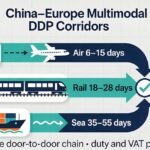
Air transport has relatively high costs but fast timeliness. For urgent or small – batch transport of electric vehicle batteries, air transport can be chosen, but the trade – off between cost and timeliness needs to be considered. If the timeliness requirement is not high or the transport volume is large, sea transport may be a more economical choice.
Multimodal Transport and Rail Transport
Application of China – Europe Railway Express: Analysis of the Pros and Cons of Stable Timeliness and a Relatively Loose Environment (Temperature Control)
The China – Europe Railway Express is a stable transport mode with the advantages of stable timeliness and relatively low transport costs. When transporting electric vehicle batteries, the China – Europe Railway Express can provide a relatively loose environment, such as temperature control conditions, which can better protect the performance and safety of the batteries. However, the transport time of the China – Europe Railway Express is relatively long, which may not meet the needs of some customers with high timeliness requirements.
Key Node Handover and Document Consistency in Sea – Rail/Air – Land Multimodal Transport
When carrying out sea – rail/air – land multimodal transport, attention should be paid to the handover of key nodes and the consistency of documents. When handing over between different transport modes, it is necessary to ensure that the packaging, marking, and labeling of the batteries remain consistent, and relevant documents need to be transmitted and updated in a timely manner. In addition, it is necessary to coordinate the transport plans and arrangements between different transport modes to ensure that the batteries can arrive at the destination safely and on time.
Step 3: Panoramic Perspective of Core Risks and Systematic Response
Safety Risks (Highest Priority)
Thermal Runaway: Fire Chain Reaction in Cases of Impact, Squeeze, and High – temperature Environment
Electric vehicle batteries may be impacted, squeezed, or exposed to high – temperature environments during transport, which may cause short – circuit inside the batteries, trigger thermal runaway, and then lead to fire or even explosion. Thermal runaway is one of the most serious safety risks in the transport of electric vehicle batteries. Once it occurs, the consequences will be disastrous.
Response: Strengthen Packaging, SOC Control, Use Fire – resistant Containers, and Install Remote Monitoring Equipment (Such as Temperature and Humidity Sensors)
To deal with the risk of thermal runaway, the following measures can be taken:
- Strengthen packaging: Use strong and durable packaging materials to fully protect the batteries and reduce the impact of impact and squeeze on the batteries.
- SOC control: Strictly control the state of charge of the batteries and keep it within the specified range to reduce the internal energy of the batteries and reduce the risk of thermal runaway.
- Use fire – resistant containers: Use fire – resistant containers to a certain extent prevent the spread of fire.
- Install remote monitoring equipment: Install remote monitoring equipment, such as temperature and humidity sensors, to monitor the temperature and humidity changes of the batteries in real – time and detect abnormal situations in a timely manner and take corresponding measures.
Leakage and Pollution: Environmental Hazards Caused by Electrolyte Leakage
Electric vehicle batteries contain electrolyte. If the batteries leak during transport, the electrolyte may cause environmental pollution. The electrolyte is usually corrosive and toxic, which may damage soil, water sources, and other environments and may also pose a hazard to human health.
Response: Use Absorbent Materials and Leak – proof Trays
To deal with the risk of electrolyte leakage, absorbent materials, such as activated carbon and absorbent cotton, can be used inside the packaging to absorb any leaked electrolyte. At the same time, leak – proof trays can be used to place the batteries on the trays to prevent the electrolyte from leaking onto the ground.
Compliance and Customs Clearance Risks
Inconsistent/Incomplete Documents: Leading to Port Detention and Huge Demurrage Fees
In the export process, if the documents are inconsistent or incomplete, it may lead to port detention and huge demurrage fees. For example, if the UN number filled in the declaration form is inconsistent with the UN number of the actual goods, or the content of the test summary is inconsistent with the actual test results, it may result in the goods being detained or fined.
Response: Establish a Standardized Document Checklist
To avoid the problem of inconsistent or incomplete documents, a standardized document checklist can be established to check the relevant documents one by one to ensure the accuracy and completeness of the documents. The checklist can include the UN number, proper shipping name, packaging instructions, net quantity, dangerous goods category, test report, MSDS, etc.
Regulatory Changes: Such as the Sudden Upgrade of Standards in Destination Countries
The regulations of destination countries may change suddenly, such as upgrading standards or adding new requirements. This may cause the enterprise’s products to fail to meet the regulatory requirements of the destination countries, thus affecting the export of products.
Response: Cooperate with Professional Customs Clearance Agents and Subscribe to Regulatory Updates
To deal with the risk of regulatory changes, enterprises can cooperate with professional customs clearance agents to keep abreast of regulatory changes in destination countries. At the same time, they can subscribe to relevant regulatory update information, such as regulatory notices issued by industry associations and government departments, to adjust their export strategies and product standards in a timely manner.
Operational and Supply Chain Risks
Transport Delay: Affecting Vehicle Production or After – sales Spare Parts Supply
Transport delay may affect vehicle production or after – sales spare parts supply, bringing economic losses to enterprises. For example, if the batteries cannot arrive at the destination on time, it may lead to the suspension of vehicle production or the inability to provide after – sales spare parts services to customers in a timely manner.
Response: Plan Alternative Routes and Purchase Logistics Delay Insurance
To deal with the risk of transport delay, alternative routes can be planned. When problems occur on the main transport route, the transport can be switched to the alternative route in a timely manner. At the same time, logistics delay insurance can be purchased to obtain corresponding compensation in case of transport delay.
Cargo Damage and Claims: Difficulties in Assessing and Claiming for High – value Goods
Electric vehicle batteries are high – value goods, and cargo damage may occur during transport. Due to the high value of the batteries, it may be difficult to assess the damage and make claims. For example, insurance companies may have disputes over the degree of damage and the value of the batteries, making the claims process complex and time – consuming.
Response: Record the Entire Process with Images, Purchase Sufficient Cargo Insurance, and Clarify Inspection Terms
To deal with the risk of cargo damage and claims, the following measures can be taken:
- Record the entire process with images: Record the loading, unloading, handling, and storage of the batteries with images during transport to provide evidence in case of cargo damage to prove the cause and degree of cargo damage.
- Purchase sufficient cargo insurance: Purchase sufficient cargo insurance to obtain sufficient compensation in case of cargo damage.
- Clarify inspection terms: Clarify inspection terms in the contract, specifying how both parties will inspect and assess the cargo after it arrives at the destination and how to handle cargo damage claims.
Commercial and Reputation Risks
Customer Rejection: Doubts About Battery Performance Due to Transport
If the batteries are damaged or their performance is affected during transport, customers may reject the goods. This will not only bring economic losses to enterprises but also affect their commercial reputation.
Damage to Brand Reputation: Public Trust Crisis Caused by Safety Accidents
If safety accidents, such as fire and explosion, occur during the transport of batteries, it may trigger a public trust crisis and damage the enterprise’s brand reputation. Once the brand reputation is damaged, it may take a lot of time and effort to restore it.
Step 4: Building an Enterprise – wide End – to – end Risk Management System
Appoint an Internal “Battery Transport Compliance Officer”
Enterprises should appoint an internal “battery transport compliance officer” responsible for the compliance management of exporting electric vehicle batteries. The compliance officer should have relevant professional knowledge and skills, be familiar with relevant regulations and standards for exporting electric vehicle batteries, be able to formulate and implement compliance management strategies, supervise and inspect the enterprise’s compliance status, and identify and solve compliance problems in a timely manner.
Select and Audit Professional Logistics Partners: Inspect Their DG Operation Qualifications, Historical Cases, and Emergency Response Capabilities
When selecting logistics partners, enterprises need to conduct strict inspection and audit. Focus on inspecting the DG (Dangerous Goods) operation qualifications of logistics partners, including whether they have relevant certifications and licenses, whether they have a professional dangerous goods transport team and equipment, etc. At the same time, it is necessary to understand the historical cases of logistics partners, including whether they have records of dangerous goods transport accidents and how they handled these accidents. In addition, it is necessary to inspect the emergency response capabilities of logistics partners, including whether they have emergency plans and emergency handling measures and whether they can deal with emergencies effectively in a timely manner.
Invest in Training: Ensure That Sales, Planning, and Warehouse Staff Have Basic Risk Awareness
Enterprises should invest in employee training to ensure that relevant staff, such as sales, planning, and warehouse staff, have basic risk awareness. The training content can include the hazards of electric vehicle batteries, transport regulations and standards, safe operation methods, emergency handling measures, etc. Through training, the risk awareness and emergency response capabilities of employees can be improved to ensure that they can comply with relevant regulations in daily work and avoid safety accidents.
Develop Detailed Emergency Response Plans (Response Processes from Single – box Leakage to Full – box Fire)
Enterprises should develop detailed emergency response plans, including response processes from single – box leakage to full – box fire. The emergency response plan should clarify the responsibilities and tasks of each department and personnel, specify the measures and steps to be taken in case of different types of emergencies. For example, in case of single – box leakage, it should specify how to handle the leakage, evacuate personnel, and monitor the environment; in case of full – box fire, it should specify how to extinguish the fire, rescue personnel, and investigate the accident. At the same time, enterprises should organize emergency response plan drills regularly to test the feasibility and effectiveness of the emergency response plan and improve the emergency response capabilities of employees.
Use Technical Tools: Use Internet of Things (IoT) Devices to Achieve Full – process Visualization and Early Warning in Transport
Enterprises can use Internet of Things (IoT) devices to achieve full – process visualization and early warning in transport. By installing sensors and monitoring devices on transport vehicles, containers, and batteries, relevant data during transport, such as temperature, humidity, vibration, and location, can be collected in real – time and transmitted to the monitoring platform. The monitoring platform can analyze and process the data, detect abnormal situations in a timely manner and issue early warning signals to remind relevant personnel to take corresponding measures. For example, if the temperature of the batteries exceeds the specified threshold, the monitoring platform can issue an early warning signal in a timely manner to notify the driver or relevant personnel to take cooling measures to avoid thermal runaway and other dangerous situations.
Future Outlook: Challenges in Green Logistics and Circular Economy
Reverse Logistics: Regulatory and Operational Challenges in Cross – border Recycling of Used Power Batteries
With the increase in the use of electric vehicle batteries, the number of used power batteries is also increasing. Cross – border recycling of used power batteries faces regulatory and operational challenges. Different countries and regions may have different regulations and standards for the recycling and treatment of used power batteries. Enterprises need to understand and comply with these regulations and standards. At the same time, the recycling and treatment of used power batteries require professional technology and equipment and involve multiple aspects such as logistics and environmental protection, making the operation difficult.
Sustainable Transport: Exploring More Low – carbon Transport Modes and Packaging Materials
In the context of increasing global environmental awareness, sustainable transport has become a future development trend. Enterprises need to explore more low – carbon transport modes, such as using new energy transport vehicles and optimizing transport routes, to reduce carbon emissions during transport. At the same time, they also need to explore more environmentally friendly packaging materials, such as biodegradable materials and recyclable materials, to reduce the impact of packaging waste on the environment.
Regulatory Convergence: Trends and Impacts of Global Unified Standard Construction
In the future, the regulations on the export of electric vehicle batteries may gradually converge towards global unified standard construction. This will help reduce the compliance costs and difficulties for enterprises in different countries and regions and improve the efficiency and safety of global electric vehicle battery transport. However, regulatory convergence may also put forward higher requirements for enterprises’ technological innovation and product upgrading. Enterprises need to continuously improve their technological level and product quality to adapt to new regulatory requirements.
Conclusion: Safety, Compliance, and Reliability – The Logistics Cornerstone for Driving Future Travel
Summary: Exporting Electric Vehicle Batteries is a Systematic Project, and Technical Preparation, Process Refinement, and Risk Awareness Are Indispensable
Exporting electric vehicle batteries is a systematic project involving product design, production and manufacturing, transport logistics, regulatory compliance, and other links. In the export process, sufficient technical preparation must be made to ensure that the performance and safety of the batteries meet relevant regulations and standards; all processes must be carefully refined to improve export efficiency and quality; a strong sense of risk must be maintained to identify and deal with various risks in a timely manner. Only by combining technical preparation, process refinement, and risk awareness can we ensure the safety, compliance, and smooth progress of exporting electric vehicle batteries.
Appeal: Internalize Transport Safety and Compliance as Part of Product Competitiveness to Achieve Long – term Stable Development
Enterprises should internalize transport safety and compliance as part of product competitiveness. They should not only focus on the performance and quality of products but also attach great importance to the safety and compliance of products during transport. By strengthening transport safety management and improving compliance levels, enterprises can win the trust and recognition of customers and enhance the market competitiveness of their products. At the same time, enterprises should actively participate in the formulation and improvement of industry standards to promote the healthy development of the electric vehicle battery export industry and provide a safe and reliable logistics guarantee for future travel.
Appendix: Key Check – node Checklist for Exporting Electric Vehicle Batteries
Before Production: The Product Has Passed All Necessary Certifications (Such as UN38.3), and the MSDS Has Been Updated
Before production, it is necessary to ensure that the product has passed all necessary certifications, such as the UN38.3 test report, and the MSDS (Material Safety Data Sheet) has been updated to the latest version. The UN38.3 test report is an important document to prove that the battery meets transport safety requirements, and the MSDS provides chemical safety information about the battery to help cargo handlers understand the hazards, emergency measures, and safe operation methods.
Before Booking: Confirm That the SOC Meets the Requirements and Obtain DG Approval from Shipping Companies/Airlines
Before booking, it is necessary to confirm that the state of charge (SOC) of the batteries meets the requirements. Usually, sea transport requires SOC ≤ 30%, and air transport requires SOC ≤ 30% (in some cases, more stringent requirements may be imposed). At the same time, it is necessary to obtain DG (Dangerous Goods) approval from shipping companies or airlines to ensure that the batteries are allowed to be transported.
During Packaging: Use Certified Packaging, Complete Anti – short – circuit, Fixation, and Leak – proof Treatment, and Post Correct Marking and Labeling
During packaging, certified packaging materials, such as UN – certified cardboard boxes and wooden boxes, should be used. At the same time, anti – short – circuit, fixation, and leak – proof treatment should be completed to ensure that the batteries do not short – circuit, move, or leak during transport. In addition, correct marking and labeling should be posted, including the UN number, proper shipping name, dangerous goods category, and battery marking, for easy identification and management.
On the Document Side: Ensure That the Information in the Dangerous Goods Declaration Form, Test Report, Commercial Invoice, and Packing List is “Consistent in Five Documents”
On the document side, it is necessary to ensure that the information in the dangerous goods declaration form, test report, commercial invoice, and packing list is “consistent in five documents”. That is, the relevant information about the batteries, such as the UN number, proper shipping name, packaging quantity, and weight, must be consistent in all documents. This is an important prerequisite for smooth export. Otherwise, it may lead to port detention and fines.
Before Loading: Complete the Pre – loading Inspection (CTU Code) to Ensure That the Loading Meets Isolation and Stowage Requirements
Before loading, the pre – loading inspection (CTU Code) should be completed to ensure that the loading meets isolation and stowage requirements. The inspection content includes whether the battery packaging is intact, whether the marking and labeling are correct, whether the batteries are fixed firmly, and whether the ventilation, isolation, and heat insulation conditions of the container meet the requirements. Only after passing the inspection can the loading operation be carried out.
During Transport: Start Full – process Tracking and Master the Dynamics
During transport, full – process tracking should be started to master the transport dynamics of the batteries in real – time. This can be achieved through GPS positioning systems, logistics information platforms, etc., to understand the location, transport status, temperature, and humidity of the batteries in real – time. Once abnormal situations are detected, corresponding measures should be taken in a timely manner to ensure that the batteries can arrive at the destination safely and on time.
Before Customs Clearance: Ensure That All Destination Market Access Documents (Such as EU Conformity Declaration) Are Delivered with the Goods or in Advance
Before customs clearance, it is necessary to ensure that all destination market access documents, such as the EU conformity declaration, are delivered with the goods or in advance. These documents are important evidence to prove that the batteries meet the regulatory requirements of the destination market. Without these documents, customs clearance may be delayed or the goods may be detained. Therefore, before exporting, relevant documents should be prepared in advance to ensure their accuracy and completeness.