







In the wave of globalized trade, international cargo transportation plays a crucial role. However, when it comes to dangerous goods consolidation, especially for special cargo such as lithium batteries, vehicles, and equipment, the situation becomes extremely complex. Booking shipments in compliance is not only the key to ensuring the safe transportation of goods but also the core link to guarantee the smooth progress of export business. This article will, in the form of Q&A, deeply analyze the core principles, common misunderstandings, operation specifications, and handling strategies for special cargo in dangerous goods consolidation, providing you with comprehensive and professional guidance.
I. Core Principles and Common Misunderstandings in Dangerous Goods Consolidation
1. I want to export a set of solar energy storage system, including batteries, inverters, and cables. How should I book the shipment?
The entire solar energy storage system is a typical scenario of dangerous goods consolidation, where the batteries are dangerous goods, while the inverters and cables are ordinary electrical equipment. When booking the shipment, the following detailed steps should be followed:
- Determine the battery type and UN number: First, it is necessary to clearly identify whether the batteries are lithium-ion batteries or lithium-metal batteries. These two types of batteries have completely different chemical properties and risk levels, so their transportation requirements and declaration procedures are also vastly different. The UN numbers for lithium-ion batteries are usually UN 3480 (lithium-ion batteries) or UN 3481 (lithium-ion batteries contained in equipment), while the UN numbers for lithium-metal batteries are UN 3090 (lithium-metal batteries) or UN 3091 (lithium-metal batteries contained in equipment). Accurately determining the UN number is the first step to ensure the smooth transportation of goods.
- Check if the battery capacity exceeds the standard: Battery capacity is one of the important indicators to determine whether it is a dangerous good. Generally speaking, if the rated energy of a lithium-ion battery exceeds 100Wh, or the lithium content of a lithium-metal battery exceeds 1g, it needs to be transported as a dangerous good. Therefore, before booking the shipment, it is necessary to accurately measure the battery capacity and ensure that it meets the relevant standards. If the battery capacity exceeds the standard, special packaging and protective measures may be required, or a special transportation permit may need to be applied for.
- Prepare relevant documents: To ensure the smooth transportation of goods, a series of documents need to be prepared, including MSDS (Material Safety Data Sheet), dangerous goods packaging certificate, transportation appraisal report, etc. These documents are important evidence to prove the safety and compliance of the goods, and are also the focus of review by shipping companies and customs. The MSDS details the chemical properties, hazard characteristics, safety protection measures, etc. of the batteries; the dangerous goods packaging certificate proves that the packaging of the batteries meets the relevant standards; the transportation appraisal report is issued by a professional institution to prove the safety of the batteries during transportation.
- Unified declaration: The entire system can be declared as “equipment containing batteries” to avoid the risk of dangerous goods consolidation after being disassembled. This can simplify the declaration process and reduce unnecessary troubles. At the same time, when making the declaration, it is necessary to provide detailed information on the composition of the goods, battery type, UN number, etc., so that the shipping company and customs can accurately judge the nature of the goods and transportation requirements. In addition, relevant documents and materials need to be provided to support the authenticity and compliance of the declaration content.
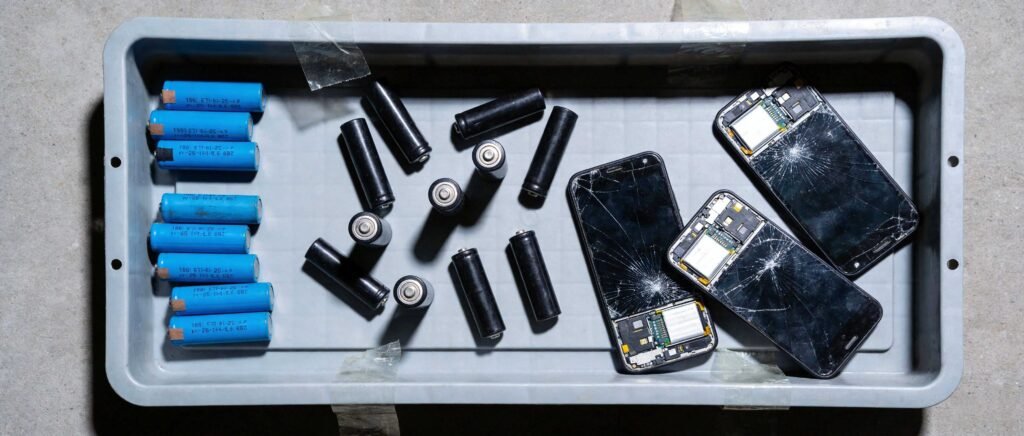
2. Can lithium batteries, dry batteries (such as Nanfu), and mobile phones be placed on the same pallet?
Under the rules of dangerous goods consolidation, lithium batteries and dry batteries can be placed on the same pallet in principle, but strict isolation requirements must be met. Specifically, the following points should be noted:
- Isolation requirements: Although both lithium batteries and dry batteries are battery products, their chemical properties and risk levels are different. Lithium batteries have a relatively high energy density and are prone to short circuits, overheating, and even explosions when subjected to external forces such as impact and extrusion; while dry batteries have a relatively low energy density and a relatively low risk level. Therefore, when consolidating, appropriate isolation measures need to be taken to prevent chemical reactions or short circuits between them. For example, they can be stored separately using partitions, cushioning materials, etc., to ensure that there is sufficient safe distance between them.
- Handling of mobile phones containing lithium batteries: Mobile phones themselves also contain lithium batteries, so when consolidating, the short-circuit protection and packaging compliance of mobile phones need to be considered. The lithium batteries in mobile phones are usually built-in, so it is necessary to ensure that the packaging of the mobile phones is intact to avoid damage to the batteries due to extrusion, collision, and other external forces. At the same time, during transportation, mobile phones need to be stored separately from other goods to prevent safety accidents caused by short circuits of mobile phone batteries. In addition, it is necessary to check whether the battery capacity of the mobile phones exceeds the standard. If it exceeds the standard, they need to be transported as dangerous goods.
- Declare according to the highest risk category: When consolidating, it is necessary to declare according to the highest risk category and do a good job in isolation and marking. Lithium batteries have a relatively high risk level, so when making the declaration, the risk category of lithium batteries should be taken as the highest risk category. At the same time, obvious dangerous goods labels should be affixed to the packaging of the goods to remind relevant personnel of the danger of the goods. In addition, it is necessary to provide detailed information on the consolidation of the goods in the transportation documents so that the shipping company and customs can accurately judge the nature of the goods and transportation requirements.
II. Transportation Attributes and Consolidation Risks of Battery-Powered Vehicles
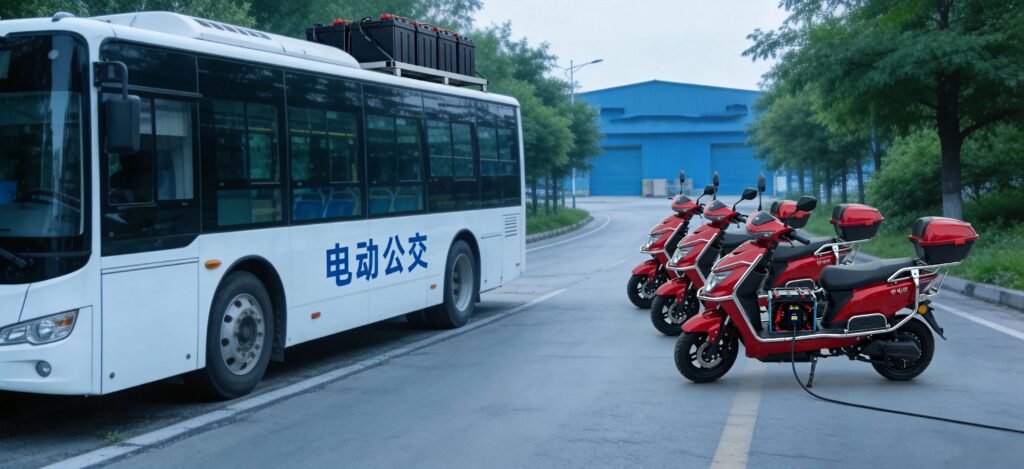
3. We want to export an electric bus. Is it considered a dangerous good or a vehicle?
If the battery is not removed and meets the requirements of UN 3171 (battery-powered vehicles), the electric bus should be declared as a vehicle-type dangerous good. Specifically, the following points should be noted:
- Judgment of transportation attributes: The transportation attribute of the electric bus depends on the state of its battery. If the battery is not removed and meets the requirements of UN 3171, then the electric bus is a vehicle-type dangerous good. This is because there is a certain safety risk in the battery during transportation, and it needs to be managed in accordance with the transportation requirements for dangerous goods. UN 3171 applies to vehicles equipped with batteries, including electric vehicles, electric motorcycles, electric bicycles, etc. The batteries of these vehicles may be subjected to external forces such as impact and extrusion during transportation, leading to short circuits, overheating, and even explosions, so special packaging and protective measures need to be taken.
- Difference from other situations: The transportation attribute of the electric bus is different from that of “scrapped vehicles” or “individual batteries” in the scenario of dangerous goods consolidation. Scrapped vehicles usually have lost their use value, and their batteries may be damaged or leaked, so they need to be handled in accordance with special transportation requirements for dangerous goods. The transportation of individual batteries requires more strict packaging and protective measures to prevent short circuits, leaks, and other situations during transportation. In contrast, as an in-use vehicle, the battery of the electric bus is in relatively good condition, but it still needs to be managed in accordance with the transportation requirements for dangerous goods.
- Confirmation of relevant information: Before booking the shipment, it is necessary to confirm information such as the battery type, whether it is fixed, and whether it meets the packaging specifications. This information is crucial for judging the transportation attribute and transportation requirements of the electric bus. For example, if the battery is detachable, it needs to be packaged separately during transportation and handled in accordance with the transportation requirements for dangerous goods. In addition, it is necessary to confirm information such as the battery capacity and UN number to accurately declare the nature of the goods and transportation requirements. At the same time, relevant documents and materials need to be provided to support the authenticity and compliance of the declaration content.
4. When exporting a children’s toy car containing lithium batteries, should it be declared as a toy or a battery dangerous good?
If the battery is built-in and meets the requirements of UN 3171, it can be classified as a “battery-powered vehicle”; if the battery is detachable and packaged separately, it involves dangerous goods consolidation – the battery and the toy should be declared separately. Specifically, the following points should be noted:
- Situation with built-in battery: If the battery of the children’s toy car is built-in and meets the requirements of UN 3171, it can be declared as a “battery-powered vehicle”. In this case, the transportation attribute of the toy car mainly depends on the nature of the battery and transportation requirements. Therefore, before booking the shipment, it is necessary to confirm information such as the battery type, capacity, and UN number, and prepare relevant documents and materials. At the same time, it is necessary to ensure that the packaging of the toy car meets the relevant standards to prevent damage to the battery during transportation. In addition, it is necessary to provide detailed information on the composition of the goods, battery type, UN number, etc. in the transportation documents so that the shipping company and customs can accurately judge the nature of the goods and transportation requirements.
- Situation with detachable battery: If the battery of the children’s toy car is detachable and packaged separately, it involves the issue of dangerous goods consolidation. In this case, the battery needs to be transported as a dangerous good, while the toy car can be transported as ordinary cargo. Therefore, when booking the shipment, the battery and the toy car need to be declared separately, and relevant documents and materials need to be prepared respectively. At the same time, appropriate isolation measures need to be taken to prevent collisions, friction, and other situations between the battery and the toy car, which may lead to safety accidents. In addition, it is necessary to provide detailed information on the consolidation of the goods in the transportation documents so that the shipping company and customs can accurately judge the nature of the goods and transportation requirements.
- Based on battery risk: The toy attribute does not affect the determination of dangerous goods, and the battery risk is the criterion. That is, regardless of the toy attribute of the children’s toy car, as long as its battery is a dangerous good, it needs to be managed in accordance with the transportation requirements for dangerous goods. Therefore, before booking the shipment, it is necessary to accurately judge the nature and risk level of the battery and take corresponding measures to ensure the safe transportation of the goods. At the same time, relevant documents and materials need to be provided to support the authenticity and compliance of the declaration content.
III. Forbidden Combinations and Operation Specifications in Dangerous Goods Consolidation
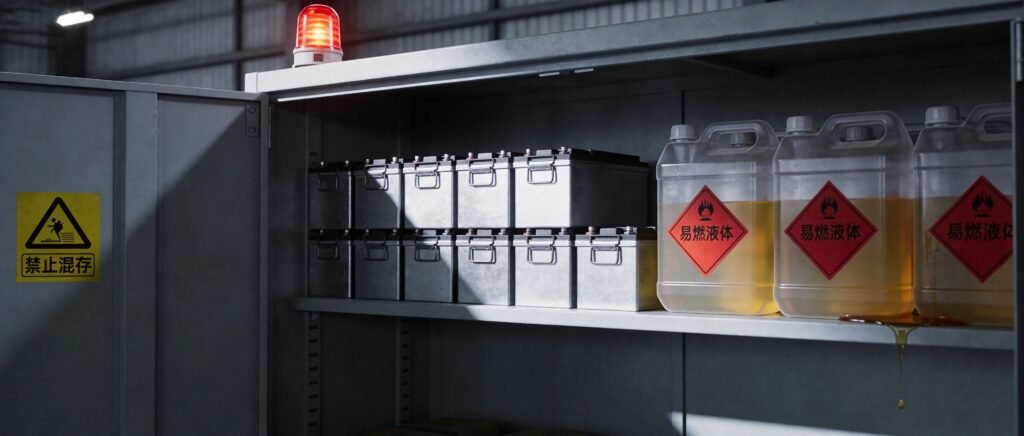
5. Can lithium batteries and flammable liquids (such as perfume) be loaded in the same container?
The rules of dangerous goods consolidation clearly state that lithium batteries (Class 9) and flammable liquids (Class 3) are generally not allowed to be consolidated. The specific reasons are as follows:
- Incompatible chemical properties: There are significant differences in the chemical properties of lithium batteries and flammable liquids, and chemical reactions may occur between them, leading to safety accidents such as fires and explosions. Lithium batteries may short-circuit, overheat, and even catch fire when subjected to external forces such as impact and extrusion; while flammable liquids are flammable and explosive, and will burn rapidly or even explode once exposed to a fire source. If lithium batteries and flammable liquids are loaded in the same container, a serious safety accident may occur in the event of leakage or collision.
- High safety risks: Without physical isolation or non-compliance with the isolation table, there are serious safety risks. Even if physical isolation measures are taken, it cannot be completely guaranteed that no chemical reactions will occur between them. Therefore, to ensure the safe transportation of goods, it is generally not recommended to load lithium batteries and flammable liquids in the same container. If it is really necessary to load them in the same container, strict isolation measures need to be taken, such as storing them separately using explosion-proof partitions, fire-resistant materials, etc., and ensuring that there is sufficient safe distance between them. At the same time, detailed information on the consolidation of the goods needs to be provided in the transportation documents, along with relevant safety measures and emergency plans.
- Special situations require meeting isolation requirements: If they need to be loaded in the same container, isolation requirements must be met and declared as dangerous goods consolidation. In special situations, if it is really necessary to load lithium batteries and flammable liquids in the same container, strict isolation measures need to be taken, such as storing them separately using explosion-proof partitions, fire-resistant materials, etc. At the same time, when making the declaration, it is necessary to clearly state the consolidation situation of the goods and provide relevant safety measures and emergency plans. In addition, approval from the shipping company and customs is required to ensure the safe transportation of the goods.
6. Can battery-powered drones and battery-powered mobile phones be placed on the same pallet?
If both are lithium-ion batteries and the packaging is compliant, they belong to the same category of dangerous goods consolidation and can be placed on the same pallet. However, when consolidating, the following points should be noted:
- Short-circuit protection: Both the lithium batteries of drones and mobile phones need to be properly protected against short circuits. During transportation, the batteries may be subjected to external forces such as extrusion and collision, leading to short circuits and safety accidents. Therefore, when packaging, insulating materials should be used to wrap the electrodes of the batteries to prevent short circuits. At the same time, it is necessary to ensure that the packaging of the batteries is intact to avoid damage to the batteries. In addition, appropriate protective measures need to be taken during transportation, such as using cushioning materials, fixing devices, etc., to prevent the batteries from being subjected to external forces such as extrusion and collision.
- Consistent outer packaging labels: Consistent outer packaging labels can facilitate relevant personnel to identify the nature of the goods and transportation requirements. When consolidating, it is necessary to ensure that the outer packaging labels of drones and mobile phones are consistent, including dangerous goods labels, UN numbers, battery types, etc. This can avoid misjudgment by relevant personnel during operation and ensure the safe transportation of the goods. At the same time, detailed information on the composition of the goods, battery type, UN number, etc. needs to be provided in the transportation documents so that the shipping company and customs can accurately judge the nature of the goods and transportation requirements.
- Unified declaration according to the highest risk category: It is recommended to make a unified declaration according to the highest risk category to simplify the management of dangerous goods consolidation. Although both the lithium batteries of drones and mobile phones are lithium-ion batteries, their risk levels may be different. For example, the battery capacity of drones is usually relatively large, and the risk level is relatively high; while the battery capacity of mobile phones is relatively small, and the risk level is relatively low. Therefore, when making the declaration, the battery with the highest risk category should be taken as the basis for the declaration to ensure that the goods receive sufficient attention and protection. At the same time, detailed information on the consolidation of the goods needs to be provided in the transportation documents, along with relevant safety measures and emergency plans.
IV. Special Handling of Transit, Residues, and Equipment-Type Cargo
7. What is “transit battery cargo”? For example, if the goods are shipped from China to Vietnam but the ship stops in Hong Kong, is a declaration required in Hong Kong?
Transit means that the goods do not enter the local market at the transit point. Whether a declaration is required at the transit point for transit battery cargo depends on the specific situation:
- No unloading or transshipment: As a transit port, if the goods are not unloaded or transshipped in Hong Kong, a separate declaration is usually not required. In this case, the goods only stay briefly at the port of Hong Kong and then continue to the destination. Therefore, no separate declaration procedures are required in Hong Kong. However, it is necessary to ensure that the transportation documents of the goods are complete and comply with the relevant regulations of Hong Kong. At the same time, the shipping company and Hong Kong customs need to be informed of the transit situation of the goods so that they can make corresponding arrangements.
- Transshipment or storage: If transshipment or storage is required, the relevant regulations of Hong Kong for dangerous goods transit must be complied with to avoid detention due to dangerous goods consolidation. During transshipment or storage, the goods may be consolidated with other goods, thereby increasing the risk of dangerous goods consolidation. Therefore, in this case, it is necessary to make the declaration in accordance with the relevant regulations of Hong Kong for dangerous goods transit and take corresponding measures to ensure the safe transportation of the goods. For example, relevant documents and materials need to be provided to prove the safety and compliance of the goods; appropriate isolation measures need to be taken to prevent the goods from being consolidated with other dangerous goods; obvious dangerous goods labels should be affixed to the packaging of the goods to remind relevant personnel of the danger of the goods.
8. We are exporting battery production equipment, but there is a small amount of electrolyte residue in the equipment. Is it considered a dangerous good?
If the residual electrolyte belongs to the dangerous goods category (such as corrosive, flammable), the equipment may be identified as a dangerous good. When handling such goods, the following points should be noted:
- Judgment of residue nature: First, it is necessary to judge the nature of the residual electrolyte to determine whether it belongs to the dangerous goods category. If the residual electrolyte has dangerous characteristics such as corrosiveness and flammability, the equipment may be identified as a dangerous good. Therefore, before export, a comprehensive inspection of the equipment is required, including checking the composition, concentration, residual amount, and other information of the electrolyte. At the same time, relevant test reports need to be provided to prove that the nature of the residual electrolyte meets the relevant standards. If the residual electrolyte belongs to the dangerous goods category, it needs to be managed in accordance with the transportation requirements for dangerous goods.
- Provision of relevant certificates: If the equipment is identified as a dangerous good, a residue description, cleaning certificate, or residual amount test report needs to be provided, and the declaration should be made as “equipment containing dangerous goods”. These certificates can prove the safety and compliance of the equipment and are also the focus of review by shipping companies and customs. The residue description needs to provide detailed information on the nature, residual amount, handling measures, etc. of the residual electrolyte; the cleaning certificate needs to prove that the equipment has been thoroughly cleaned and the residual electrolyte has been removed; the residual amount test report needs to be issued by a professional institution to prove that the content of the residual electrolyte meets the relevant standards. At the same time, detailed information on the composition of the goods, nature of the residual electrolyte, handling measures, etc. needs to be provided in the transportation documents so that the shipping company and customs can accurately judge the nature of the goods and transportation requirements.
- Implementation of protective measures: During transportation, appropriate protective measures need to be taken to prevent the leakage of residual electrolyte and safety accidents. For example, sealing materials can be used to seal the openings of the equipment to prevent electrolyte leakage; corrosion-resistant materials can be used to make the packaging of the equipment to prevent corrosion of the equipment by the electrolyte; absorbent materials can be placed around the equipment to absorb any possible electrolyte leakage. At the same time, detailed information on the content and implementation of the protective measures needs to be provided in the transportation documents so that the shipping company and customs can understand the safety guarantee measures for the goods.
V. Declaration Strategies for Consolidation of Multiple Types of Dangerous Goods
9. How to declare multiple types of lithium batteries with different UN numbers in the most convenient way?
They can be declared as “lithium battery consolidation”, which belongs to the same category of dangerous goods consolidation and simplifies the operation. Specifically, the following points should be noted:
- Conditions for consolidated declaration: Multiple types of lithium batteries with different UN numbers belong to the same category of dangerous goods, so they can be declared as “lithium battery consolidation”. This can simplify the declaration process and reduce unnecessary troubles. However, when making the consolidated declaration, it is necessary to ensure that all information on the battery type, UN number, capacity, etc. is accurately declared to the shipping company and customs. At the same time, relevant documents and materials need to be provided to support the authenticity and compliance of the declaration content. For example, the MSDS, dangerous goods packaging certificate, transportation appraisal report, etc. of each type of lithium battery need to be provided to prove their safety and compliance.
- Separate indication of UN numbers: If the UN numbers are different, they still need to be indicated separately, but unified packaging can be used. Although a consolidated declaration can be made, the transportation requirements for lithium batteries with different UN numbers may be different. Therefore, when making the declaration, the UN number of each type of lithium battery needs to be indicated separately so that the shipping company and customs can accurately judge the nature of the goods and transportation requirements. At the same time, when packaging, lithium batteries with different UN numbers can be packaged uniformly, but appropriate isolation measures need to be taken to prevent chemical reactions or short circuits between them. For example, they can be stored separately using partitions, cushioning materials, etc., to ensure that there is sufficient safe distance between them.
- Unified packaging and declaration according to the highest risk UN number: The best practice is to carry out unified packaging and declaration according to the highest risk UN number. The risk levels of lithium batteries with different UN numbers may be different, so when packaging and declaring, the lithium battery with the highest risk UN number should be taken as the reference standard, and corresponding protective measures and declaration procedures should be adopted. This can ensure the safe transportation of the goods and avoid safety accidents due to insufficient risk assessment. For example, if a shipment contains both lithium-ion batteries with UN 3480 and lithium-metal batteries with UN 3090, the packaging and declaration should be carried out in accordance with the requirements of UN 3090, because lithium-metal batteries have a relatively high risk level. At the same time, detailed information on the composition of the goods, UN number of each type of lithium battery, risk level, etc. needs to be provided in the transportation documents so that the shipping company and customs can accurately judge the nature of the goods and transportation requirements.
10. Can batteries and chargers be transported together? Is the charger considered a dangerous good?
The charger itself is not a dangerous good, but if it is placed in the same box as the battery, it is a scenario of dangerous goods consolidation. When handling such goods, the following points should be noted:
- Secure fixation: During transportation, the battery and the charger need to be securely fixed to avoid collisions, friction, and other situations between them, which may lead to short circuits and safety accidents. They can be fixed in the box using foam, sponge, and other cushioning materials to reduce vibration and impact. At the same time, it is necessary to ensure that the packaging of the battery and the charger is intact to avoid damage to them. In addition, special fixing devices such as straps and buckles need to be installed in the box to fix the battery and the charger in appropriate positions to prevent them from moving during transportation.
- Avoid short circuits: The plug of the charger and the electrode of the battery may come into contact, leading to a short circuit of the battery. Therefore, when packaging, the plug of the charger needs to be insulated to prevent contact with the electrode of the battery. The plug of the charger can be wrapped with insulating tape, insulating sleeves, and other materials to ensure that it does not come into direct contact with the electrode of the battery. At the same time, insulation protection devices such as insulating caps and insulating pads need to be installed on the electrode of the battery to prevent short circuits. In addition, the battery and the charger need to be stored separately during transportation to avoid short circuits between them.
- Unified declaration according to the battery category: When placed in the same box, the entire shipment should be declared according to the battery category. Since the battery is a dangerous good, when making the declaration, the battery and the charger should be regarded as a whole and declared according to the battery category. This can ensure that the goods receive sufficient attention and protection and avoid safety accidents due to improper declaration. At the same time, detailed information on the composition of the goods, battery type, UN number, etc. needs to be provided in the transportation documents so that the shipping company and customs can accurately judge the nature of the goods and transportation requirements. In addition, relevant documents and materials need to be provided to support the authenticity and compliance of the declaration content.
VI. Distinction between Lithium-Metal and Lithium-Ion Batteries and Precautions for Consolidation
11. What is a “lithium-metal battery”? What is the difference between it and a lithium-ion battery?
A lithium-metal battery (UN 3090/3091) is a non-rechargeable battery containing metallic lithium; a lithium-ion battery (UN 3480/3481) is a rechargeable battery that does not contain metallic lithium. The main differences between them are as follows:
- Different chemical properties: The positive electrode material of a lithium-metal battery is usually metallic lithium, and the negative electrode material is carbon material; while the positive electrode material of a lithium-ion battery is usually a lithium compound, and the negative electrode material is carbon material. Due to the different chemical properties, there are also significant differences in their charge-discharge performance, safety, etc. Lithium-metal batteries have a relatively high energy density but poor charge-discharge performance, and are prone to lithium dendrite growth during charging, leading to short circuits, overheating, and even safety accidents; while lithium-ion batteries have good charge-discharge performance, and their energy density is constantly improving. They also adopt special designs and materials to effectively avoid lithium dendrite growth and improve the safety of the battery.
- Different charging performance: Lithium-metal batteries are non-rechargeable, and once the battery power is exhausted, the battery needs to be replaced; while lithium-ion batteries can be recharged repeatedly and have a relatively long service life. This is one of the most significant differences between lithium-metal batteries and lithium-ion batteries. Since lithium-metal batteries are non-rechargeable, their use cost is relatively high, and they are not environmentally friendly; while lithium-ion batteries can be recharged repeatedly, their use cost is relatively low, and they are more environmentally friendly.
- Different safety performance: Lithium-metal batteries are prone to lithium dendrite growth during charging, leading to short circuits, overheating, and even safety accidents; while lithium-ion batteries adopt special designs and materials to effectively avoid lithium dendrite growth and improve the safety of the battery. For example, lithium-ion batteries use separator materials to prevent short circuits; overcharge protection circuits to prevent overcharging; temperature protection devices to prevent overheating. The application of these designs and materials has greatly improved the safety of lithium-ion batteries.
- Precautions for consolidation: When they are consolidated, they belong to the consolidation of dangerous goods with different UN numbers, and separate marking, isolation, or unified declaration according to the high risk category is required. When consolidating, appropriate isolation measures need to be taken to prevent chemical reactions or short circuits between them. For example, they can be stored separately using partitions, cushioning materials, etc., to ensure that there is sufficient safe distance between them. At the same time, obvious dangerous goods labels should be affixed to the packaging of the goods, indicating their UN numbers and battery types respectively, so that relevant personnel can accurately identify the nature of the goods and transportation requirements. In addition, when making the declaration, the battery with the highest risk category should be taken as the basis for the declaration to ensure that the goods receive sufficient attention and protection.
12. My product is an electric lawn mower with a detachable battery. Is it better to remove the battery or not during transportation?
Whether to remove the battery of the electric lawn mower needs to be comprehensively considered based on the specific situation:
- Advantages of removing and packaging separately: By removing and packaging separately, the battery is handled as a dangerous good, and the equipment is handled as ordinary cargo, avoiding the risk of dangerous goods consolidation. This can simplify the declaration process and reduce unnecessary troubles. At the same time, during transportation, the battery and the equipment can be stored separately to prevent collisions, friction, and other situations between them, which may lead to safety accidents. In addition, more targeted packaging and protective measures can be taken according to the specific situation of the battery to ensure the safe transportation of the battery. For example, if the battery capacity is relatively large, a special battery packaging box can be used; if the battery requires special temperature control, temperature-controlled equipment can be used for transportation.
- Advantages of not removing: If the battery is not removed, the entire machine is declared according to UN 3171, which belongs to a single dangerous good and simplifies the operation. This can avoid separate packaging and protection of the battery during transportation, reducing the workload. At the same time, when making the declaration, only a single dangerous good declaration is required, and the process is relatively simple. In addition, it can reduce the packaging volume and weight of the goods, reducing transportation costs. However, it should be noted that when declaring the entire machine, it is necessary to ensure that the battery is in good condition, meets the requirements of UN 3171, and appropriate measures need to be taken to prevent damage to the battery during transportation.
- Comprehensive judgment: It is recommended to make a comprehensive judgment based on the battery capacity, customer requirements, and route policies. If the battery capacity is relatively large, or the customer has high requirements for the safety of the battery, then removing the battery and packaging it separately can be considered. If the route policy has strict restrictions on dangerous goods consolidation, then removing the battery and packaging it separately can also be chosen. Conversely, if the battery capacity is relatively small, or the customer has high requirements for transportation convenience, then not removing the battery and declaring the entire machine can be chosen. At the same time, factors such as transportation cost and transportation time also need to be considered to select the most suitable transportation plan. Before making a decision, it is best to consult a professional logistics consultant or relevant institution to obtain more accurate and detailed advice.
VII. Comparison of Consolidation Scenarios in the Transportation of Electric Vehicles
13. What are the differences in operation when exporting electric motorcycles with built-in batteries and those with external batteries?
There are significant differences in the transportation operation of electric motorcycles with built-in batteries and those with external batteries:
- Situation with built-in battery: Electric motorcycles with built-in batteries are declared as a whole according to UN 3171, and there is no problem of dangerous goods consolidation. In this case, the transportation attribute of the electric motorcycle mainly depends on the nature of the battery and transportation requirements. Therefore, before booking the shipment, it is necessary to accurately judge the battery type, UN number, capacity, etc., and prepare relevant documents and materials. At the same time, during transportation, appropriate packaging and protection measures need to be taken for the electric motorcycle to prevent damage to the battery. For example, a special motorcycle packaging box can be used for packaging, and cushioning materials can be installed in the packaging box to reduce vibration and impact; fixing devices can be used to fix the electric motorcycle in the packaging box to prevent it from moving during transportation. In addition, detailed information on the composition of the goods, battery type, UN number, etc. needs to be provided in the transportation documents so that the shipping company and customs can accurately judge the nature of the goods and transportation requirements.
- Situation with external battery: For electric motorcycles with external batteries, the battery and the vehicle are packaged separately. The battery is declared according to UN 3480/3090, and the vehicle is declared as ordinary cargo, which belongs to cross-category dangerous goods consolidation management. In this case, separate declarations need to be made for the battery and the vehicle, and appropriate isolation measures need to be taken to prevent collisions, friction, and other situations between them, which may lead to safety accidents. At the same time, during transportation, the battery and the vehicle need to be stored separately to avoid chemical reactions or short circuits between them. For example, the battery can be placed in a special battery packaging box, and the vehicle can be placed in a special vehicle packaging box, and then the two packaging boxes can be loaded in different containers or transportation tools respectively. In addition, detailed information on the composition of the goods, battery type, UN number, vehicle information, etc. needs to be provided in the transportation documents so that the shipping company and customs can accurately judge the nature of the goods and transportation requirements.
- Consistency of transportation batches: For external batteries, attention needs to be paid to the consistency of transportation batches between the battery and the vehicle to avoid customs clearance confusion. During transportation, the battery and the vehicle may be transported by different transportation modes or tools. Therefore, it is necessary to ensure that the transportation batches of the battery and the vehicle are consistent so that they can pass the customs clearance smoothly. At the same time, when making the declaration, detailed information on the transportation batches and transportation modes of the battery and the vehicle needs to be provided so that the customs can accurately judge the origin and destination of the goods. In addition, communication with the shipping company and freight forwarder is required to ensure that they can coordinate the transportation arrangements of the battery and the vehicle to avoid transportation delays or customs clearance problems.
Through the above Q&A-style popular science, it is believed that you have a deeper and more comprehensive understanding of dangerous goods consolidation and special cargo transportation. In actual operation, it is recommended that you strictly comply with relevant regulations and standards to ensure the safe transportation of goods. At the same time, if you have any questions, you are welcome to consult a professional logistics consultant or relevant institution at any time, and they will provide you with more accurate and detailed advice.