





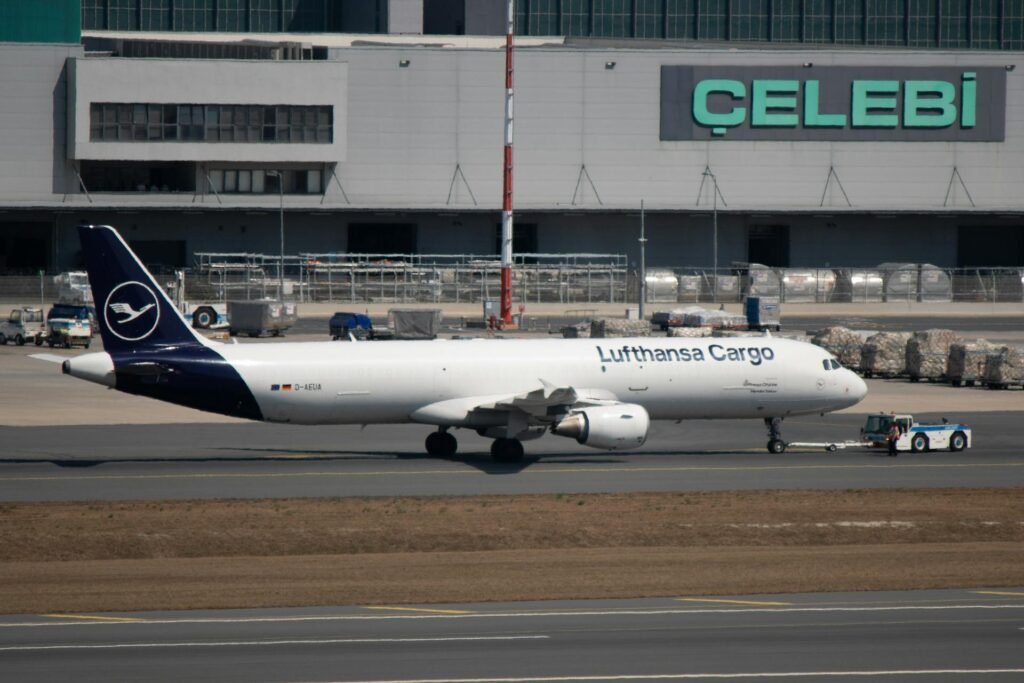
“Hello, can I still book cargo space to Los Angeles?” “Why have air freight rates jumped again in just one day?” As soon as he arrived at work in the morning, Manager Zhang, a freight forwarder, was inundated with calls from clients. In the office, his colleagues were also frowning at their computer screens—backend systems showed that air freight orders on multiple China-US routes had formed long queues. Cargo space that was once easily available had become hard to come by, and air freight rates had kicked off a “daily increase model.”
This sudden air freight “storm” is not an isolated incident. With the release of positive Sino-US trade news and the approach of the Christmas peak season, the global air freight market is experiencing a “blitz” triggered by supply-demand imbalance. Unlike the slow adjustments in ocean shipping, the air freight market’s reaction speed and volatility are far beyond expectations, catching not only freight industry practitioners off guard but also impacting enterprises and consumers relying on cross-border logistics. Today, we will break down the logic behind this fluctuation and understand the underlying rules of short-term ups and downs in the air freight market.
Phenomenon Insight—Why Is the Air Freight Market “Overheating”?
The Reality Behind the Data: Short-Term Explosive Supply-Demand Contradiction
The recent “overheating” of the air freight market is reflected in a set of intuitive data. However, these data are not as simple as they seem and need to be interpreted in combination with actual market scenarios:
- A nearly 500% surge in cargo volume: This stunning growth rate does not refer to the increase in global air freight volume, but the short-term explosion of orders for specific China-US routes and leading freight forwarders. For example, the booking demand for the US West Coast route focused on by a certain freight forwarder has increased fivefold compared with before in a week, which centrally reflects the “pulsating eruption” of demand.
- A 10% rise in air freight rates: A direct manifestation of supply-demand imbalance. Air freight rates on the originally stable China-US trunk routes have risen by 10% within just three days, and “bidding for orders” has even appeared for some popular cargo spaces. The core reason is that there are more orders than available cargo spaces.
- A 5-working-day waiting period for cargo space booking: The previous rhythm of “loading within 1-2 days after placing an order” has been broken. Now, after booking, it is necessary to wait in line for 5 working days or even longer to secure a cargo space. The air freight market has completely changed from “waiting for flights” to “flights waiting for cargo spaces,” which shows the severity of capacity constraints.
These data together depict a picture: air freight demand has erupted centrally in a short period, while capacity supply has been unable to keep up synchronously. The balance of supply and demand in the market has tilted sharply towards the seller, ultimately leading to rising air freight rates and scarce cargo spaces.
Root Cause Analysis—Why Does Air Freight React So Quickly and Violently?
The reason why the air freight market can set off a “storm” in a short period is not caused by a single factor, but the result of the superposition of three core factors: trade policies, seasonal demand, and capacity characteristics. These three factors interact with each other, ultimately amplifying the amplitude and speed of market fluctuations.
The First Driving Force: The “Signal Light” Effect of Trade Policies
Air freight cargo has distinct characteristics: high value, high timeliness, and relative insensitivity to transportation costs. For products such as electronic components, high-end cosmetics, and precision instruments, enterprises value “on-time delivery” more than transportation costs, making air freight the preferred transportation method for such goods.
When positive Sino-US trade news was released and expectations of tariff reductions strengthened, the market immediately produced a “signal light” effect. To seize the policy window and quickly launch their products into the US market, enterprises have accelerated their shipment rhythm. Among all transportation methods, air freight is the fastest choice—ocean shipping takes 30-40 days, while air freight only takes 3-7 days, which can help enterprises quickly seize market opportunities. As a result, a large number of orders have flooded into the air freight market, becoming the “first driving force” for the explosion of demand and the surge in air freight rates.
The Second Accelerator: The “Final Countdown” to the Christmas Peak Season
The Christmas season is the “golden peak season” for global retail and a “rigid deadline” for cross-border logistics. For US retailers, Christmas goods must be on the shelves by the end of November to catch up with the holiday consumption boom.
With the arrival of mid-to-late October, the ocean shipping channel has basically been “closed”—booking now, after the goods arrive at US ports, go through customs clearance and inland transportation, they will not be able to catch up with the Christmas sales. Therefore, all Christmas goods that need to be on the shelves on time must be transported by air. From toys, clothing to home decorations, various Christmas-related goods have poured into the air freight market, further increasing demand pressure and becoming the “second accelerator” driving the market’s “overheating” and pushing air freight rates higher.
The Third Amplifier: The “Rigid Bottleneck” of Air Freight Itself
Unlike ocean shipping, air freight capacity supply is almost fixed in the short term, which is the core reason for its sharp market fluctuations. Air freight capacity mainly consists of two parts: full cargo aircraft and passenger aircraft belly cargo, with passenger aircraft belly cargo accounting for more than 60%.
The number of full cargo aircraft is limited by factors such as aircraft purchase and route approval, and cannot be increased quickly in the short term; while the capacity of passenger aircraft belly cargo depends on the number of passenger flights. Even if the passenger transport market recovers, it takes a certain cycle to add flights. This has led to a “rigid bottleneck” in air freight capacity—it cannot be quickly adjusted according to short-term changes in demand.
When flexible and surging demand meets rigid and limited capacity, the supply-demand contradiction is instantly amplified, which is ultimately directly reflected in soaring air freight rates and scarce cargo spaces. This is also the key reason why the air freight market fluctuates more violently and reacts more quickly than ocean shipping.
Impacts and Responses—How Do Market Participants “Navigate Through the Crisis”?
The short-term fluctuations in the air freight market are like a “major examination,” testing the response capabilities of all participants in the supply chain. Different roles face different dilemmas and have different focus on response strategies.
For Shippers (Cargo Owners): Controlling Costs and Ensuring Timeliness Are Core
- Dilemma: On the one hand, the rise in air freight rates directly increases logistics costs and compresses profit margins; on the other hand, the prolonged waiting period for cargo space may lead to delayed delivery of goods, causing them to miss market windows or sales peak seasons.
- Response Strategies: Advance planning is crucial. Try to avoid the air freight peak season in October-November. If shipment is necessary during this period, book cargo space 2-3 weeks in advance; flexibly choose airports, avoid core hub airports such as Los Angeles and New York, and select surrounding non-core airports, which can often secure more cargo spaces and more stable air freight rates; establish long-term cooperative relationships with freight forwarders, as long-term cooperative clients usually get higher priority when cargo spaces are scarce.
For Freight Forwarders: Resource Integration and Precise Services Are Competitiveness
- Dilemma: The explosion of orders has led to enormous operational pressure, and cargo space resources have become scarce. They not only have to deal with frequent inquiries from clients but also coordinate with airlines to ensure cargo spaces. A slight mistake may affect the client experience.
- Response Strategies: Strengthen market forecasting, use historical data and industry trends to predict demand peaks in advance, and take the initiative to charter flights or lock in some cargo spaces with airlines; provide transparent information to clients, timely inform them of cargo space status and changes in air freight rates, and avoid disputes caused by information asymmetry; provide alternative solutions for clients with different needs, such as recommending transit routes and adjusting shipment times, to improve service flexibility and stabilize air freight rates for clients as much as possible.
For End Consumers: Possible Minor Price Increases or Temporary Out-of-Stock
- Potential Impacts: Some Christmas goods that rely on air freight may see minor price increases due to rising logistics costs; if goods are delayed in transportation, individual popular products may experience temporary out-of-stock situations.
- Suggestions for Response: For rigid-demand products such as Christmas gifts, purchase them in advance to avoid being affected by out-of-stock or price increases during the holiday season; view price fluctuations rationally. The price adjustments caused by short-term increases in air freight rates are usually temporary, and the market will gradually return to stability after the holiday.
Conclusion: Understanding the “Pulse” of the Market
The recent sharp fluctuations in the air freight market are a classic case of the superposition of three factors: positive trade policies, explosive seasonal demand, and rigid capacity bottlenecks. It once again confirms the characteristics of the air freight market—as a “barometer” of global trade, it can quickly reflect changes in market supply and demand; as an “ambulance” of cross-border logistics, it is the first choice for high-timeliness and high-value goods; and its rigid capacity bottleneck makes short-term fluctuations the norm.
For every participant in the supply chain, understanding the underlying logic of air freight market fluctuations is the key to seizing the initiative in changes. Whether it is advance planning, flexible adjustments, or establishing long-term and stable cooperative relationships, it is essentially to reduce the risks brought by fluctuations by adapting to market rules. For ordinary consumers, understanding these underlying logics can also help them view the price and supply changes of some goods during the holiday season more rationally.
In the future, with the adjustment of the global trade pattern and the cycle of seasonal demand, short-term fluctuations in the air freight market will continue to occur. But as long as we can read its “pulse,” we can find our own way to “navigate through the crisis” in this supply chain “blitz.”