





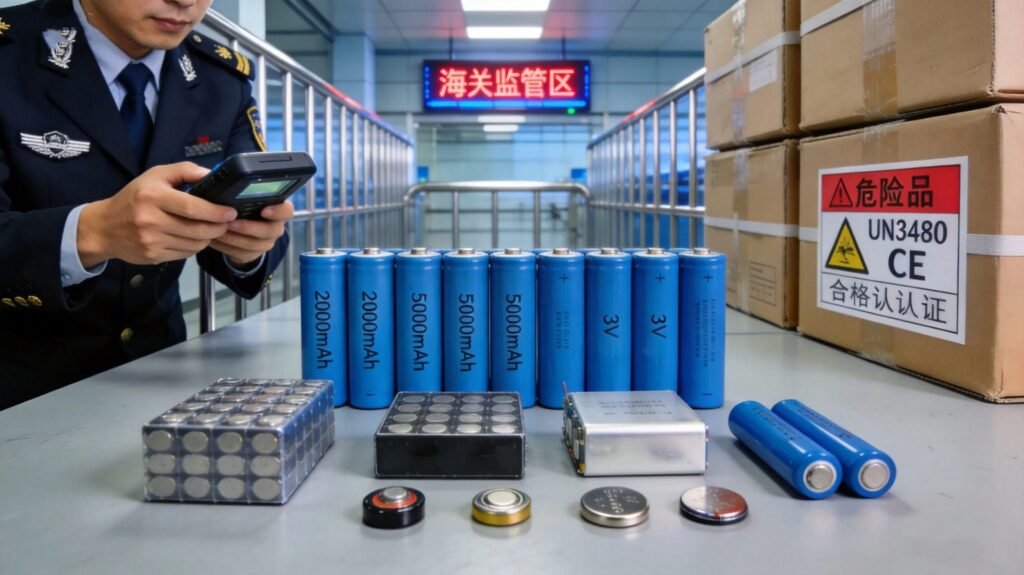
Why Battery Products Have Become High-Risk Items in Cross-Border E-Commerce
Cross-border e-commerce sellers often face product removals, customs seizures, and platform penalties due to battery compliance issues, with some cases showing single violations costing hundreds of thousands of dollars. These risks stem from lithium batteries’ flammable nature, subjecting them to strict regulations throughout transportation, warehousing, customs clearance, and platform listing processes. From UN38.3 testing requirements for air transport to Amazon’s Battery Information Sheet (BIS) reviews and EU CE certification, non-compliance at any stage can trigger chain reactions.
Compliance Alert: Lithium batteries have become a key focus of cross-border e-commerce regulation. Their safety risks make compliance not an “option” but a “mandatory requirement” for market access. Ignoring compliance can lead to irreversible consequences like supply chain disruptions and brand damage.
This article systematically covers platform rule analysis, logistics transportation standards, overseas warehouse operations, tax considerations, and reverse logistics solutions to provide cross-border e-commerce battery compliance best practices, helping businesses achieve successful market entry and stable operations.
Platform Rule Differences and Compliance Requirements
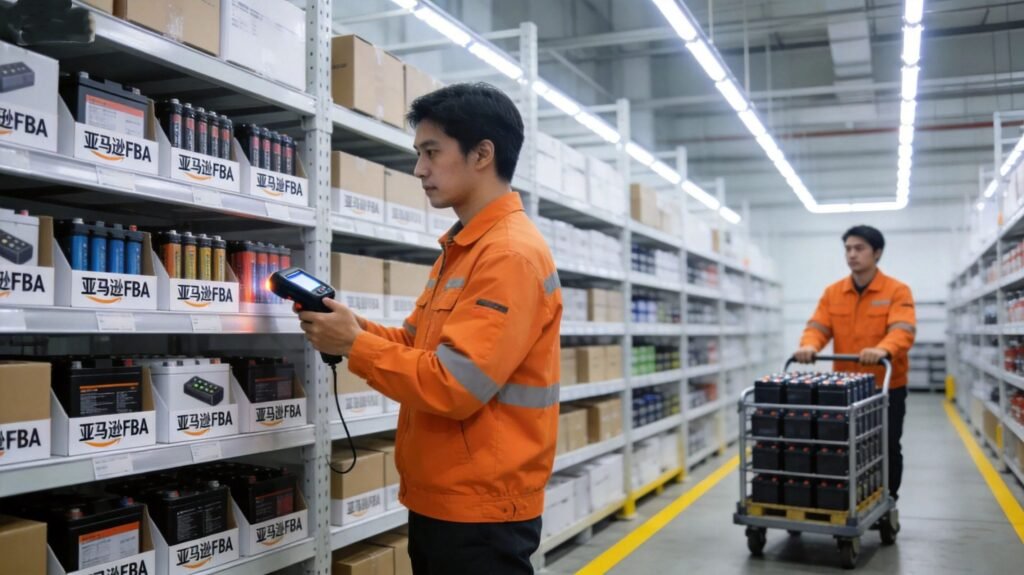
Key Amazon FBA Compliance Requirements
Amazon FBA Warehouse Entry Guidelines
- Category Approval: Listings cannot be created without prior approval for battery product categories.
- Dangerous Goods Information Submission: Inaccurate information leads to inventory reservation, removal, or destruction. Battery type and capacity must be accurately completed.
- Packaging Standards: Must use insulated bags or individual boxes with lithium battery labels; non-compliant packaging will be rejected.
- Inventory Restrictions: New sellers or underperforming accounts may face strict battery warehouse capacity limits.
In 2024, a seller lost over $80,000 when 5,000 units were destroyed for failing to submit UN38.3 reports, highlighting the critical importance of cross-border e-commerce battery compliance.
SDS vs MSDS Documentation Guidelines
SDS (Safety Data Sheet) is the GHS-standardized replacement for MSDS (Material Safety Data Sheet), with similar content but unified formatting. Obtain from manufacturers or third-party testing labs. Upload process: Log into Amazon Seller Central, access “Manage Dangerous Goods Classification”, select product, upload SDS, and complete battery information fields.
Key Reminder: Lithium battery products require three core processes before warehouse entry: category approval, dangerous goods declaration, and compliant packaging. SDS documents must follow UN GHS standard format.
Temu and SHEIN’s Special Compliance Requirements
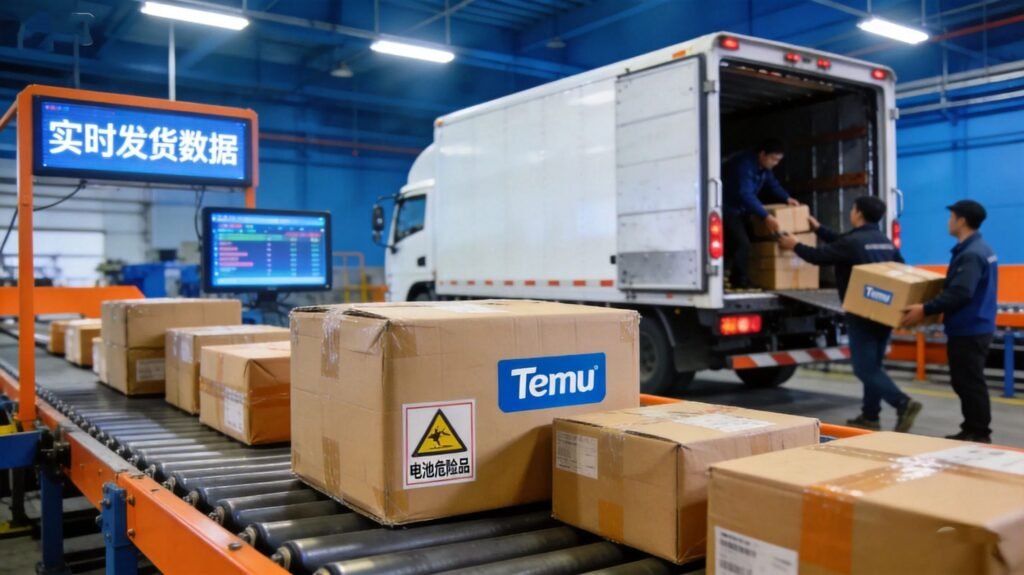
Emerging platforms like Temu and SHEIN emphasize “source control” with stricter factory qualification requirements than Amazon. Platforms mandate UN38.3 reports, MSDS/SDS documents, and transportation identification reports. In fully managed models, labeling and logistics provider selection must follow platform standards. Cases exist where sellers failed onboarding due to missing UN38.3 reports, underscoring document completeness importance.
Temu/SHEIN Compliance Essentials: Prioritize factory qualification verification, ensure complete UN38.3 documentation, and strictly follow platform logistics and labeling standards.
eBay Logistics Policy: Balancing Autonomy and Risk
eBay’s logistics policy offers dual characteristics: sellers retain logistics provider autonomy but assume full responsibility for risks. Using non-recommended carriers may result in tracking issues or battery product seizures due to insufficient forwarder qualifications, potentially restricting seller accounts.
Practical Recommendation: Prioritize eBay-approved battery transportation providers with IMDG code certification to balance operational autonomy with risk control in cross-border e-commerce battery compliance.
Within eBay’s logistics framework, selecting compliant carriers remains critical for successful battery product distribution.
Logistics Risk Mitigation and Operational Simplification
Independent Website and Parcel Logistics Standardization
Independent website sellers must implement standardized procedures for cross-border battery logistics to mitigate compliance risks. Core implementation steps include document standardization, labeling templating, and compliant declaration:
Documentation Package: Pre-prepare complete file sets including UN38.3 reports, MSDS, transportation identification reports, and shipping instructions for immediate verification during logistics processes.
Label systems require template management with fixed positions for Lithium Battery Marks and “Cargo Aircraft Only” labels to prevent transportation delays from unclear markings. Declaration must avoid undervaluation, as DHL and FedEx conduct high inspection rates on battery shipments. Undervaluation causes clearance delays and potential fines. Accurate product naming (e.g., “Power Bank”) and truthful valuation optimize clearance efficiency.
These standardized operations effectively reduce compliance risks for independent website sellers using DHL/FedEx parcel channels, ensuring supply chain stability. The process forms a closed-loop management system: document pre-review → standardized labeling → accurate declaration → logistics channel matching.
Understanding ODA Surcharges in Battery Shipping
ODA (Out of Delivery Area) surcharges result from batteries’ status as sensitive goods. Couriers only allow battery transit through core service areas with dangerous goods handling capabilities. Deliveries to remote areas trigger additional costs, representing logistics network coverage expenses rather than battery-specific price increases. Battery delivery requires special handling, creating significant cost differences from regular goods. Sellers can verify core service areas via DHL’s official tools to avoid unexpected expenses and optimize operations using “ODA surcharge” keyword strategies.
Key Reminder: Battery ODA fees relate to service area coverage, not product value. Verify addresses using courier tools before shipping to prevent unexpected cross-border e-commerce battery compliance costs.
Overseas Warehouse Operational Details
Dropshipping Labeling Strategies
In dropshipping models, battery product labeling requires clear responsibility allocation. Domestic labeling suits standardized high-volume products with precise quality control but risks label coverage during overseas warehouse relabeling. Overseas labeling offers flexibility for multi-SKU shipments but incurs $0.5-$1.5 per unit fees.
Decision Factors:
- SKU Quantity: Multi-SKU operations favor overseas labeling; single SKUs benefit from domestic labeling
- Packaging Stability: Fragile packaging recommends overseas labeling
- Cost Sensitivity: Low-margin products require domestic labeling cost control
Sellers should optimize compliance efficiency by incorporating “overseas warehouse dropshipping” and “battery labeling” keywords into their supply chain strategies.
Compliant Disposal of Unsold Battery Inventory
Unsold cross-border e-commerce battery products must be disposed of by certified electronic waste handlers like E-Waste Systems (US) or WEEE-accredited EU companies. Direct disposal is prohibited. Costs typically range $2-5/kg, including service fees and weight-based charges, with official disposal certificates required.
Compliance Warning: A seller received €50,000 fine from EU environmental authorities for improper battery disposal, highlighting the importance of compliant inventory management in cross-border e-commerce battery compliance.
Battery disposal costs exceed regular products, requiring sellers to integrate “unsold inventory disposal” into supply chain risk management with pre-established compliant partner relationships.
VAT Deferment Impact on Battery Declared Value
VAT deferment schemes (e.g., UK PVA, Germany) improve cash flow by delaying import VAT payment until product sale. Battery products face high inspection rates requiring realistic valuation—UK PVA requires declared value within 10% of Amazon selling price. Market price comparison tools help verify declared values and prevent deferment application failures.
Key Reminder: Battery product declared values must follow the principle of authenticity. Market price verification tools ensure cross-border e-commerce battery compliance and reduce deferment rejection risks.
Customs Clearance and Return Solutions
Lithium Battery Clearance: Rapid Resolution Strategies for Seized Shipments
When battery shipments face customs detention, targeted solutions must be implemented within critical timeframes. For common detention scenarios:
24-Hour Golden Processing Period
Immediately contact local customs brokers (e.g., Clearit for US, Kuehne+Nagel for Europe) to bypass domestic forwarder delays. Local brokers understand regulatory nuances and can directly engage inspection authorities.
Document Issues Response: For missing UN38.3 reports or outdated MSDS, immediately provide latest compliance documents to brokers. Ensure document information matches labels and declarations to prevent secondary delays.
Undervaluation Protocol: Significant value discrepancies require cooperation with customs for revaluation with authentic purchase invoices and payment records. Never forge commercial documents, as this risks fines or confiscation.
Certification Deficiency Solutions: Missing UL/CE certifications with no quick remedy require decisive return shipment or destruction decisions. Return preserves ownership while destruction prevents escalating storage fees, based on product value and disposal costs.
Successful resolution requires expertise in “destination port clearance” and “lithium battery customs procedures,” leveraging compliant documentation and local resources to minimize seizure impacts.
Practical Battery Return Solutions
Battery product return to origin countries is rarely feasible. As Class 9 dangerous goods, lithium batteries require specialized transport, with strict Chinese customs regulations making return impossible for most enterprises. Costs typically exceed 30% of product value, necessitating alternative reverse logistics approaches:
Core Alternatives
- Overseas Warehouse Refurbishment: Services like Newgistics (US) offer testing and relabeling for ~20% of selling price, enabling relisting
- Local Destruction: Following dangerous goods protocols (Section 3.2) at ~$3/kg with required compliance documentation
- Local Resale: Facebook Marketplace and similar channels for slightly defective products
Refurbishment suits high-value items, destruction for low-value goods, and resale balances time costs with market demand—requiring dynamic strategy based on product value, condition, and regulatory requirements.
{ “legend”: { “data”: [ “Cost Ratio/Unit Cost” ], “left”: “center”, “textStyle”: { “fontSize”: 16 } }, “series”: [ { “data”: [ { “itemStyle”: {}, “label”: { “formatter”: “Over 30%”, “overflow”: “break”, “position”: “top”, “show”: true }, “value”: 30 }, { “itemStyle”: {}, “label”: { “formatter”: “20%”, “overflow”: “break”, “position”: “top”, “show”: true }, “value”: 20 }, { “itemStyle”: {}, “label”: { “formatter”: “$3/kg”, “overflow”: “break”, “position”: “top”, “show”: true }, “value”: 3, “yAxisIndex”: 1 } ], “name”: “Cost Ratio/Unit Cost”, “type”: “bar” } ], “title”: { “left”: “center”, “text”: “Battery Product Reverse Logistics Cost Comparison”, “textStyle”: { “fontSize”: 20 } }, “tooltip”: { “trigger”: “item” }, “xAxis”: { “axisLabel”: { “fontSize”: 14, “overflow”: “break” }, “data”: [ “Return to Origin”, “Overseas Warehouse Refurbishment”, “Local Destruction” ], “type”: “category” }, “yAxis”: [ { “axisLabel”: { “formatter”: “{value}%” }, “name”: “Cost Ratio(%)”, “position”: “left”, “type”: “value” }, { “axisLabel”: { “formatter”: “{value}” }, “name”: “Unit Cost(USD/kg)”, “position”: “right”, “type”: “value” } ] }
UN38.3 Certification, SDS Acquisition, and Seller Responsibility Boundaries
SDS (Safety Data Sheet) represents a core document for cross-border e-commerce battery compliance, requiring standardized acquisition procedures and clear responsibility boundaries. First priority: Request from manufacturers using template language: “Please provide UN38.3 test report and latest SDS for this product.” Reputable battery manufacturers must provide valid documentation. If unavailable or non-compliant, second option: Engage third-party testing bodies like SGS or TÜV, typically costing $300-800 per document. Third: Verify document-product matching—platforms accept manufacturer-issued SDS but require exact model matching; account-document entity mismatches don’t affect approval.
Legal Risk Warning: A seller received permanent Amazon suspension for using Photoshop-altered SDS documents. While platforms focus on product compliance, legal liability ultimately rests with sellers. Purchasing or falsifying documents risks account termination and cross-border litigation—always obtain through official channels.
Sellers bear primary responsibility for MSDS acquisition, with document authenticity directly impacting account security and legal exposure. Implementing supplier document auditing protocols and regular report updates ensures alignment with evolving regulatory requirements.
Cross-Border E-Commerce Battery Compliance as Competitive Advantage: Summary and Outlook
Cross-border e-commerce battery compliance represents a comprehensive process spanning product design, platform entry, logistics, tax declaration, and after-sales service. The EU’s 2027 New Battery Regulation, introducing carbon footprint disclosure and mandatory recycling targets, exemplifies the global shift toward sustainability-focused compliance standards. Businesses must integrate recurring testing costs ($500-$1000/product) intonormalization budgets while establishing 10-element compliance checklists covering documentation, labeling, and packaging.
Implementation Essentials: Select IMDG-certified logistics providers for transportation compliance and WEEE-accredited overseas warehouses to address EU recycling regulations.
Long-term, battery compliance has evolved from risk mitigation to core competitive advantage. Systematic compliance capabilities not only prevent penalties and market exclusion but also build brand trust amid growing green consumer trends—enabling strategic transformation from “passive compliance” to “active value creation” as the true value of cross-border e-commerce battery compliance.