





In this guide
- 1. Definitions and Service Scope
- 2. Quotation and Pre-Shipment Review
- 3. Dimensions, Weight, and Loading Limits
- 4. Packaging, Pallets, and ISPM 15 Wood Rules
- 5. Booking, Warehouse Receiving, and Loading
- 6. Export Declaration, EU Import Clearance, EORI, and VAT
- 7. Destination Port, Inland Transfer, and Final-Mile Truck Delivery
- 8. Transit Time, Tracking, and Delays
- 9. Surcharges, Charging Basis, Insurance, and Claims
- 10. Restricted and Prohibited Cargo
- 11. Post-Shipment Risk and Common Pitfalls
- References
1. Definitions and Service Scope
Q: In a DDP door-to-door service, what exactly counts as oversized cargo? How is it different from regular heavy items, FBA oversize, and OOG freight?
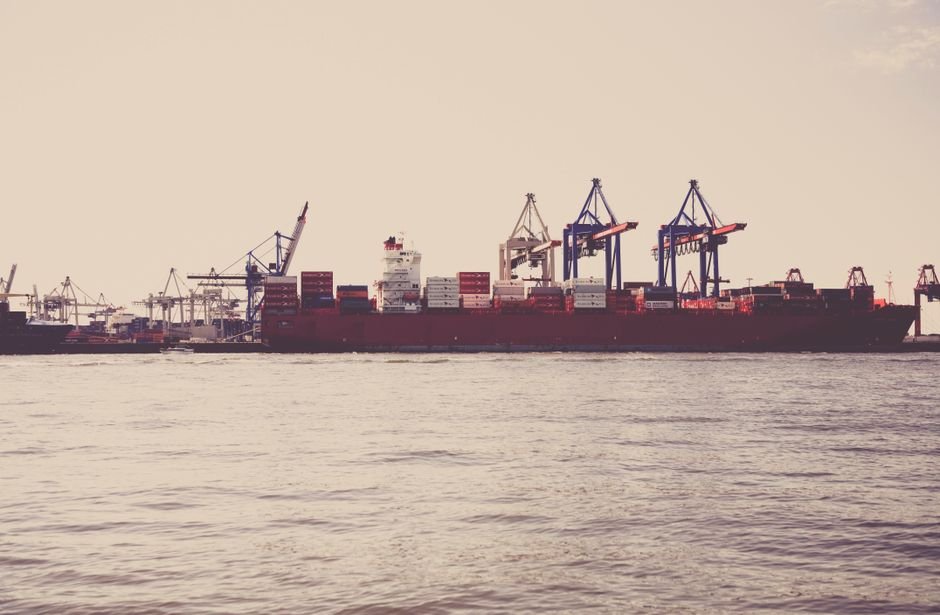
In this service, DDP oversized cargo to Europe means freight that loads fully inside a standard 40HQ container and is not OOG (out of gauge). The issue is not the container — it is the last mile. The piece is too long, too wide, too tall, or too heavy for DPD, GLS, Hermes, and similar commercial parcel networks in Germany, France, Spain, and Italy. So it cannot move as a parcel, and it has to go out on a dedicated truck from a local European carrier.
- Regular heavy items: bulky but still within the parcel carrier’s size and weight limits, so parcels handle them fine.
- FBA oversize: defined by Amazon’s own inbound rules. Plenty of FBA oversize units still ship as parcels.
- OOG freight: dimensions exceed the inside of a container, so it needs a flat rack, open top, or platform container. Ocean carriers hit it with OOG surcharges. That is a completely different logistics setup from what this page covers.
Q: Which products are a good fit for container-loadable oversized cargo with truck delivery at the destination?
Anything that fits inside a standard container but gets refused by parcel carriers. Typical examples: large solid wood furniture, shower enclosures, bathtubs, commercial gym equipment, industrial racking, battery energy storage cabinets, outdoor spa and pool equipment, large display stands, complete automated machinery lines, large-scale farming equipment, and PV mounting components.
These move regularly to Germany, France, the Netherlands, Belgium, Spain, Italy, Poland, Czechia, Austria, and Hungary. The customer base is cross-border sellers, manufacturers, trading companies, and overseas project buyers.
Q: Which countries does the DDP service cover, and where is truck delivery hardest?
Core coverage runs across Germany, France, the Netherlands, Belgium, Spain, Italy, Poland, Czechia, Austria, Hungary, Slovakia, and Portugal.
Landlocked markets such as Austria, Czechia, Hungary, and Slovakia have thinner truck capacity and longer booking windows. Many older town centers and village roads are narrow, and local rules restrict when large trucks can drive or unload, so delivery appointments are tighter. The main gateway ports are Hamburg, Rotterdam, Antwerp, and Le Havre, with inland trucking arranged after arrival.
Q: Can LCL consolidation handle this kind of oversized cargo, and what are the limits?
Yes, as long as each piece loads normally into a container and the origin warehouse has the forklift capacity to handle it.
Most consolidation warehouses cap single-piece weight and length. Some only accept pieces up to 1.5 tons. If a piece is too heavy or too long for the warehouse’s forklifts, the warehouse will refuse it, and you have to book a full container instead. LCL also puts your freight in with other shippers’ cargo, so fragile or scratch-prone oversized pieces are better off in a dedicated container.
Q: Can you deliver to FBA warehouses, third-party warehouses, residential addresses, and factory or commercial addresses? What changes in each case?
Yes to all four, but the rules, the extra cost, and the risk vary a lot:
- Factory or commercial address: usually has a loading dock and a forklift, so booking is simple and the first attempt almost always succeeds. Lowest accessorial cost.
- Third-party warehouse or Amazon FBA: you must book an oversize inbound appointment in Seller Central in advance and follow the warehouse’s pallet, label, and packaging standards to the letter. No appointment or a non-compliant pallet means rejection, plus return and rebooking costs.
- Residential address: most homes have no forklift and no loading dock, so a liftgate truck or a truck with an onboard forklift is required. Some neighborhoods and older districts have height limits, width limits, or truck bans, which can make the address physically undeliverable. Most areas do not offer weekend delivery.
Q: Can one shipment include multiple pieces and multiple SKUs, and is there a limit on how many?
Yes, multi-piece and multi-SKU shipments are fine, but every piece needs its own length, width, height, and gross weight — a total CBM and total weight number is not enough.
A long list of unrelated product names and HS codes raises the odds of a customs exam. Declare accurately, group similar items, and supply a clear piece-by-piece list showing product name, material, and end use for each unit.
2. Quotation and Pre-Shipment Review
Q: What do I need to send you to get a quote on DDP oversized cargo to Europe?
Standard quote inputs: packed length, width, and height per piece; gross weight per piece; total piece count; product name; material; HS code; product photos; and a photo of the pallet base showing forklift entry points.
Also flag it up front if any piece is very heavy, top-heavy, or irregularly shaped, or if the destination is a European residential address, a narrow village road, or a site with no loading equipment. That lets us line up the right truck and decide whether a liftgate or onboard forklift is needed before the cargo is on the water, not after it arrives.
Q: What extra paperwork do batteries and used machinery require?
Motors and powered equipment with no built-in battery just need standard declaration data. Cargo with built-in lithium batteries needs an MSDS, a UN38.3 test summary, and battery labels, and must clear channel screening in advance.
Used machinery needs an equipment description, age, and photos of its condition. Some categories also require a CE certificate and declaration of conformity. Reviewing this early is what keeps customs from stopping the shipment at destination.
Q: What does a DDP quote cover, and what is billed separately at cost?
A standard DDP quote covers: China pickup or warehouse receiving, export declaration, ocean freight, destination customs clearance, duties and VAT, and basic truck delivery.
Not included: manual unloading at the door, inside delivery or upstairs service, driver waiting time, second delivery attempt, remote-area surcharge, customs exam fees, port storage, container detention, and cranage. Always confirm the delivery scope with your forwarder and be clear on the difference between “curbside” and “unloaded.”
Q: How long does a DDP quote hold, and what drives price movement?
Typically 1 to 3 days. Beyond ocean space and fuel surcharges, a big part of the swing comes from European truck capacity. Capacity tightens hard around Black Friday, Christmas, and the post-New Year restart, and final-mile truck rates climb sharply. Rates only really lock once both the ocean space and the delivery plan are confirmed.
Q: Why do quotes from different forwarders vary so much on the same piece?
The differences usually sit in a few places: LCL versus FCL; a standard flatbed versus a liftgate or onboard-forklift truck; whether unloading and upstairs service are included; which duty-paid structure and tax-document setup is used; and whether remote-area or waiting-time allowances were built in.
Do not compare headline totals. Compare what the final-mile service actually includes, and what happens if delivery fails or is refused.
Q: Why is a pre-shipment review mandatory, and what does it check?
Oversized freight has very little room for error, and fixing a problem after arrival is expensive. The review checks whether the cargo is within the service’s loading limits, whether wood packaging meets ISPM 15, whether battery paperwork is complete, whether the delivery address has access restrictions, whether a truck can physically stop there, and whether pallets allow four-way forklift entry. Clearing this before cargo goes to the warehouse is what keeps exams and failed deliveries from happening.
3. Dimensions, Weight, and Loading Limits
Q: What are the internal dimensions of a 40HQ, and does fitting inside the container make it oversized cargo?
Reference internal dimensions for a 40HQ: 12.03 m long, 2.35 m wide, 2.69 m high.
The test is not whether it fits in the container. The test is whether a single piece exceeds the local parcel carrier limits and therefore needs a truck. Cargo that stays inside the container is not OOG, so no carrier OOG surcharges apply. If a piece is very long, it can still fit while eating up a lot of cube, which lowers loading efficiency and raises cost.
Q: What is the weight ceiling per piece, and what can go wrong?
There are two ceilings: the forklift limit at the origin warehouse, and the forklift limit on the European truck at the destination.
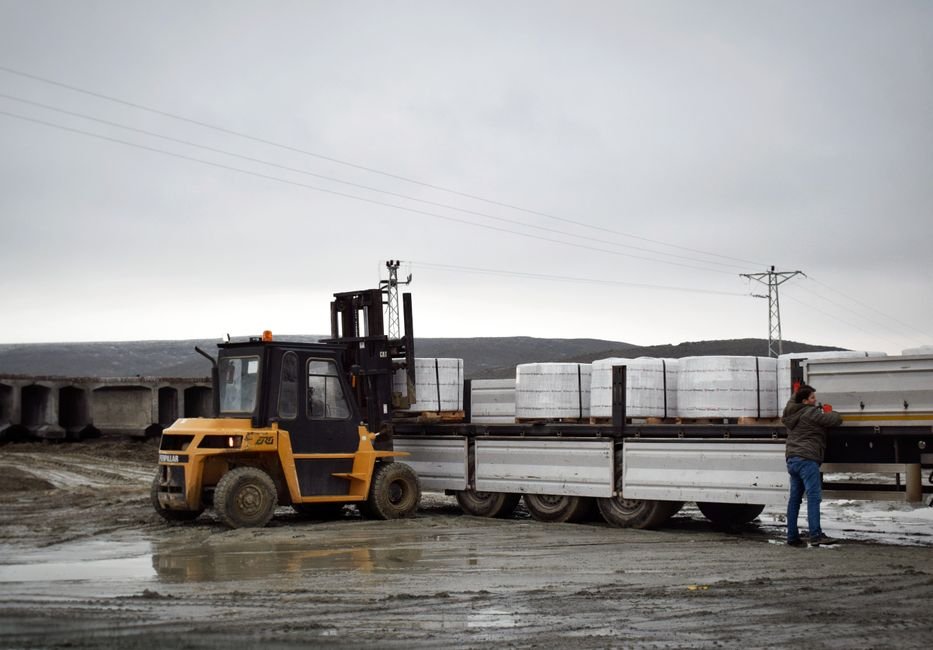
Most China warehouses run 2- to 3-ton forklifts. Many European trucking partners only carry a 1.5-ton unit. If a piece is over either limit, it cannot be handled at one end, delivery fails, and you are looking at storage, a replacement truck, and a second attempt. Confirm both ends before booking.
Q: Can multiple oversized pieces share a container, and what must never be stacked?
Stacking is acceptable only when the structure is solid, the shell can bear the load, and the pallet underneath is stable. Never stack painted equipment, glass, marble tops, precision instruments, hollow packaging, or anything with a high center of gravity.
Put a separator sheet between stacked pieces to spread the load and keep the bottom unit from deforming.
Q: Can off-center or irregularly shaped cargo still move on this service?
It can load into the container, but a badly off-center piece will tip or roll during handling and truck transit.
Reinforce the packaging, mark the center of gravity, and tell your forwarder in advance. During loading, place it low in the container and add extra lashing. At destination, match it with a truck that can handle the shape. For irregular pieces, confirm in advance that it will sit stable on the truck bed.
Q: What are the pallet requirements, and is four-way entry really mandatory?
Use a EUR pallet, 1200 x 800 mm, wherever possible. European warehouses and final-mile carriers generally require four-way forklift entry. Single-side-entry pallets jam easily at destination, and drivers routinely refuse to unload them. Pallet board thickness also has to match the load — heavy pieces need a reinforced pallet so it does not snap in transit.
4. Packaging, Pallets, and ISPM 15 Wood Rules
Q: If I use solid wood crates or wood pallets for an EU shipment, what is required?
Solid wood packaging must carry the ISPM 15 heat-treatment IPPC stamp. A fumigation certificate does not substitute for the IPPC mark. Without a valid mark, EU customs will hold the cargo and force destruction, which means storage charges, destruction penalties, and a delivery timeline blown apart. The mark has to be clear, complete, and burned into a visible outer face of the crate.
Q: Do plywood, fumigation-free pallets, and plastic pallets need an IPPC mark?
Plywood, engineered fumigation-free pallets, and plastic pallets are not solid wood packaging, so no IPPC mark is needed. They are the preferred option for DDP oversized cargo to Europe because they sidestep phytosanitary scrutiny. One caveat: some composite boards contain solid wood content and can still be treated as solid wood packaging, so buy from a reputable manufacturer.
Q: Can I ship unpackaged cargo with no crate at all, and what is the risk?
It will load, but the risk is high. Ocean motion, terminal handling, and repeated truck transfers all invite dents, scratches, and deformation. With no fixed lashing points, securing it in the container is difficult and it will shift in transit. For painted goods, precision equipment, stone, and glass, do not ship bare.
Q: How should fragile, painted, or mirror-finish pieces be packed?
Line all contact surfaces with thick foam and PE film, and add security film to glass. Fit hard plastic corner protectors, build a solid wood crate around the piece, and fill voids with cushioning foam. Mark the outside clearly with this-side-up, fragile, and center-of-gravity labels, and mark the crate face with do-not-stack.
Q: What are the lashing and securing standards?
Stretch-wrap the piece to the pallet so it cannot slide. Steel strapping suits heavy freight — pad the contact points with soft material or corner protectors so the strap does not cut into the surface. For irregular or top-heavy pieces, add extra straps tied off to the container floor rings.
Q: Which photos should I send for a packaging review?
Front, side, top, the pallet base at the forklift entry, the center-of-gravity mark, a close-up of the IPPC stamp, and details of the reinforcing. For irregular pieces, a short multi-angle video helps us assess container loading and final-mile handling in advance.
5. Booking, Warehouse Receiving, and Loading
Q: How far ahead should I book DDP oversized cargo?
Five to seven days for LCL; seven to ten days for full containers and peak-season shipments. That buffer is mainly for locking in European truck appointments. In peak season, booking ocean space without securing the final-mile truck is how you end up with cargo at port and no carrier to move it.
Q: What handling equipment does the warehouse need?
A forklift is standard; heavy pieces need a high-capacity forklift or a crane. Confirm the per-piece weight limit with the warehouse before delivery. Where possible, send the cargo in on a liftgate truck so it can be unloaded on arrival instead of racking up vehicle detention charges.
Q: What are the most common reasons a warehouse rejects oversized cargo?
No IPPC mark on wood packaging, single-side-entry pallets, declared dimensions and weights that do not match the actual freight, loose or unreinforced packaging, no clear forklift entry space, leaking cargo, or missing battery documentation.
Q: Can I book a loading supervision service, what gets photographed, and why is it worth it?
Yes, for a fee. The photo set covers cargo receipt, dimension verification, pallet and packaging, container stowage, lashing, and container sealing. It confirms the loading was done correctly, and the full image record is your core evidence if a damage claim arises later. For high-value pieces it is strongly recommended.
Q: Does DDP cargo have earlier cutoffs than general freight?
Usually yes for documentation. DDP requires the destination declaration data to be filed with the tax authority and customs ahead of time. Late paperwork delays clearance release and can cost you the sailing.
Q: When are lashing and securing charges assessed on heavy multi-piece loads?
Mixed heavy pieces need extra labor, steel strapping, corner protectors, and tie-downs. Those charges are either built into the quote upfront or billed at cost, so confirm which applies before shipping.
6. Export Declaration, EU Import Clearance, EORI, and VAT
Q: What does the export declaration require?
Commercial invoice, packing list, sales contract, customs declaration, and declaration elements. Battery products need MSDS and UN38.3 documentation. Declare invoice values honestly — under-declaring invites an audit and penalties.
Q: How are EORI and VAT handled under DDP?
DDP duty-paid channels typically clear and pay tax under the forwarder’s EORI and VAT. The tax documents belong to the forwarder, so the buyer generally cannot use them for their own VAT recovery. If you need to defer and reclaim VAT yourself, use a DDU self-tax setup with your own valid local VAT number and EORI.
Q: Which product categories need close attention on anti-dumping and countervailing duties?
Furniture, steel, aluminum products, and some ceramics carry EU anti-dumping duties. Check the applicable rate before shipping so you are not surprised by a hidden cost.
Q: What extra documents do machinery and used equipment need for clearance?
CE declaration of conformity, equipment manual, nameplate photo, and a statement of the machine’s age. Used equipment is scrutinized far more closely than new, and some older machines get ruled non-compliant and returned.
Q: Is this kind of container-loadable oversized cargo examined often, and what do customs focus on?
More often than small parcel freight. The focus is IPPC marks on wood packaging, declared dimensions and weights, HS classification, invoice value accuracy, undeclared batteries, trademark infringement, and whether the goods fall under anti-dumping controls.
Q: If customs holds the shipment, who pays?
If the cause is on the shipper’s side — wrong dimensions, missing IPPC marks, undeclared batteries, understated value — storage, exam, and disposal costs sit with the shipper. For routine random exams where the declaration is correct, costs follow the terms of your contract.
Q: How do Rotterdam, Hamburg, Antwerp, and Le Havre differ for clearance?
Hamburg and Rotterdam are the core European gateways: mature clearance systems, abundant inland truck capacity, and relatively stable delivery scheduling. Antwerp screens wood packaging and branded goods more aggressively, with a higher exam rate. Le Havre follows French clearance practice, and inland trucking is arranged after release.
7. Destination Port, Inland Transfer, and Final-Mile Truck Delivery
Q: What is the full process once the cargo arrives?
Arrival, bill of lading exchange, clearance filing and duty payment, customs release, devanning for LCL or container pickup for FCL, booking a local contract truck, delivery on the appointment date, on-site checking and unloading, then signed proof of delivery.
Q: How long does a European final-mile truck appointment take to get?
Typically 2 to 5 business days for a commercial or factory address. Residential addresses, remote villages, and restricted urban zones run 7 to 14 days, longer in peak season. Carriers schedule by access restrictions and driver rosters, so an exact hour cannot be promised.
Q: What if the delivery address has no forklift or loading dock?
Book a liftgate truck or a truck with an onboard forklift in advance. That is a value-added service billed separately. If the street is too narrow, has a height restriction, or bans trucks, the vehicle cannot stop, delivery fails, and storage plus a second attempt follow.
Q: How do residential and commercial delivery rules differ, and is weekend delivery possible?
Residential deliveries require a booked appointment window, and most carriers will not show up unannounced. Commercial addresses receive delivery on normal business days. Most European trucking companies do not deliver on weekends; a minority will, at a high surcharge. National holidays also stop operations and push schedules out.
Q: What are the main reasons Amazon FBA oversize deliveries get refused?
No oversize inbound appointment, pallets that do not meet Amazon’s oversize standard, missing or misplaced labels, damaged packaging, or pieces over the size and weight limits. Once refused, the cargo goes back to a local warehouse and rebooking costs add up fast.
Q: What happens if nobody is there to sign, or the address is wrong? How is a second attempt charged?
The cargo returns to a local warehouse to await a new appointment. A second attempt bills for the truck, storage, and driver waiting time. Repeated failed attempts can eventually lead to abandonment or auction.
Q: Is inside or upstairs delivery included in the base DDP rate?
No. It is a value-added service priced by floor, piece weight, and whether there is an elevator. Before a residential delivery, measure the stairwell and elevator. If the piece will not fit in the elevator, the only option is an outdoor crane lift, which is expensive and in some areas simply unavailable.
Q: How do I get proof of delivery, and why inspect at the door?
The driver signs the POD on site and the forwarder sends you the electronic copy. Open and inspect the shipment at the door and photograph any damage on the spot. Once you sign clean, neither the insurer nor the trucking company will honor a damage claim.
8. Transit Time, Tracking, and Delays
Q: What is the overall transit time for container-loadable DDP oversized cargo?
22 to 35 days from departure to a European base port, and 30 to 50 days door to door once clearance and the truck appointment are added.
Most of the delay is not the ocean leg. It is truck appointment queues in Europe, port congestion, and customs exams.
Q: Which tracking milestones are available?
Warehouse receipt, container loading, departure, arrival, customs release, container pickup or devanning, truck dispatch, and delivery signature. When a shipment appears stuck at destination, it is usually queuing for a truck rather than being held by customs.
Q: What causes most delays on this kind of freight?
Tight European truck capacity, appointment backlogs, customs exams, port congestion, local industry strikes, road restrictions at destination, and holiday shutdowns.
Q: How early should I plan for Black Friday and Christmas?
At least 45 days. Truck capacity gets extremely tight, ocean space and truck rates rise, and schedules stretch out as the season approaches.
Q: Can delivery be expedited?
The ocean leg cannot be sped up. What you can do is pick a direct sailing, route through a port with deep truck capacity such as Hamburg or Rotterdam, and lock the final-mile truck early. It will never behave like a parcel network.
9. Surcharges, Charging Basis, Insurance, and Claims
Q: Does this kind of container-loadable cargo attract OOG surcharges?
No, and this is the key difference from OOG freight. The cargo stays inside a standard container the whole way, so there are no ocean carrier surcharges for overlength, overwidth, or overheight. The extra cost sits at the destination: truck, unloading, upstairs service, and remote-area fees.
Q: How is freight charged?
LCL bills on volume or gross weight, whichever is greater. FCL bills at a flat container rate. Final-mile trucking, liftgate, onboard forklift, and inside delivery are quoted separately.
Q: How should I insure this freight, and what are the deductible and exclusions?
Insure cargo value plus freight under an all-risks cargo policy. Standard all-risks coverage carries a deductible and excludes packaging defects, natural loss, strikes, war, and customs seizure.
Q: What is the damage claim process?
Photograph and video the damage at delivery, notify your forwarder and the insurer immediately, then submit the damage photos, signed POD, commercial invoice, and policy for assessment and settlement.
10. Restricted and Prohibited Cargo
Q: What will this service not carry?
Flammable and explosive dangerous goods, counterfeit or infringing branded goods, controlled or prohibited items, live animals, corrosives, and radioactive material.
Q: Can equipment with batteries or residual fuel move on this service?
Built-in lithium batteries are fine with complete paperwork: MSDS and UN38.3. Equipment holding residual fuel or coolant must be drained and cleaned, or it will be refused or held.
11. Post-Shipment Risk and Common Pitfalls
Q: What happens if the declared dimensions or weight are wrong?
The truck is booked against the declared figures. If the piece is bigger or heavier in reality, it will not fit or cannot be unloaded, delivery fails, and you pay for a replacement truck, storage, and a second attempt — with return to origin as the worst case. Under-declaring an irregular piece can also throw off container planning and leave you short on space.
Q: How is liability for damage divided?
Inadequate packaging or a poor packaging design sits with the shipper. Handling and road transit problems sit with the carrier and insurer. Sign clean at delivery and the claim is effectively gone.
Q: Can the consignee or the delivery address be changed after departure?
Yes, with an amendment fee. Once the cargo has arrived and the truck is booked, changing the address gets expensive, and some carriers will refuse any change.
Q: Compared with a standard parcel-based DDP service, where do shippers get burned most often?
Most assume it works like a parcel service, with unloading and upstairs delivery included. In reality, final-mile truck appointments take time, and unloading and upstairs service are usually billed separately. Get the dimensions and weights wrong and the truck simply cannot complete the delivery, which is where the surprise costs come from.
Q: Is it worth splitting a large piece into several smaller ones?
If splitting brings each piece back under the local parcel limits, it can move as a parcel and avoid truck, unloading, and upstairs charges. But splitting adds packaging, labor, and pallet cost, and can raise the risk of damage on fragile items. Run the full math before deciding.
Q: If final-mile delivery fails, what are the fallback options?
- Option 1: Book a higher-capacity truck or one with an onboard forklift and reattempt.
- Option 2: Move the cargo to a nearby third-party warehouse and let the consignee arrange local pickup.
- Option 3: Split the pieces and move them as parcels.
- Option 4: If none of that works, return the shipment to origin.
—
<!– tf-faq:auto –> <!– /tf-faq:auto –>
References
- European Commission — Taxation & Customs — EU customs code, VAT and import rules
- IATA — International Air Transport Association — Air cargo standards and dangerous goods rules