









Europe Sea Freight Groupage Guide: How Shared LCL Containers and DDP Work
Introduction
If you sell goods to Europe and your order volumes are not yet big enough to fill a whole container, the smartest shipping option is almost always Europe sea freight groupage — the practice of sharing one ocean container with cargo from other shippers and paying only for the space your goods actually use. It is the standard, cost-effective way to move partial loads from China to destinations across Europe, and a well-run groupage service delivers far more than just a low freight line.
This guide explains how Europe sea freight groupage works from end to end: how your cargo is consolidated at origin, how it is deconsolidated and cleared on arrival, and how DDP (Delivered Duty Paid) turns the whole journey into a simple, fixed service where you pay once and your goods reach the door. We will keep it practical and avoid specific figures. The goal is to give you a clear mental model so you can book groupage with confidence and avoid the surprises that trip up first-time shippers.
At its core, choosing Europe sea freight groupage is a question of matching the tool to the job. If your shipment fills a container, you book a full container load; if it does not — and for most growing sellers it does not — groupage lets you benefit from ocean freight economics without paying for empty space. When done well, with a forwarder who consolidates regularly on your lanes, groupage is reliable, flexible, and remarkably simple to use. That is the case we will build in the pages ahead.
1. What Europe sea freight groupage really is
1.1 Shared containers, shared economics
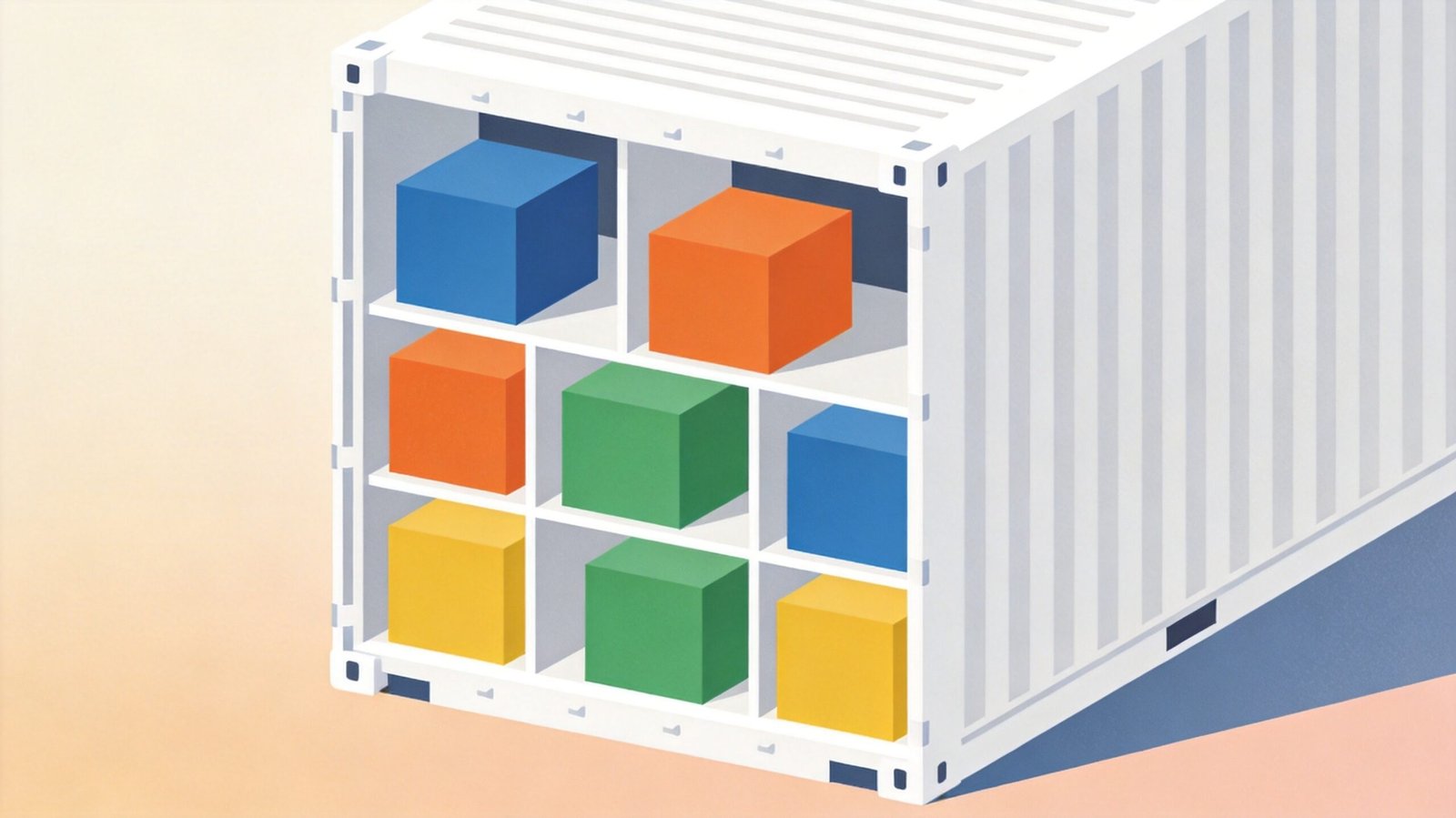
Let us define the term precisely. Europe sea freight groupage means a forwarder combines your cargo with other shippers’ cargo into one or more ocean containers headed to the same region of Europe, then splits it back out at the destination. You pay for the volume or weight you use, not for a whole container. It is often called LCL, for “less than container load.”
The economics are the heart of it. A container is a large fixed box, and when it is not full, the unused space is wasted money. Europe sea freight groupage fills that space with many smaller shipments, so everyone benefits from the efficiency of a full container while only covering their own share. For the importer, this means you do not have to grow your order volume to the size of an entire container before ocean freight becomes viable. Groupage is what makes ocean shipping accessible to e-commerce sellers, wholesalers, and brands alike.
There is an important nuance: how good the economics are depends heavily on how the forwarder runs the service. A serious operator groups cargo by destination area so that deconsolidation at the far end is clean and fast. A less careful one may stuff a container with cargo for scattered destinations, increasing handling and delay. So when you compare options, do not compare groupage pricing alone — compare how the groupage network is organized, because that determines your experience.
In practice, the quality of the network shows up as the difference between a quoted range that reliably holds and one that keeps slipping. When a forwarder runs frequent, well-organized consolidations, your Europe sea freight groupage shipments move on schedule and arrive predictably; when the operation is ad hoc, even a low headline rate can cost you more in waiting and uncertainty. Treat the forwarder’s network discipline as part of the value you are buying, and you will make a far better decision than choosing on price alone.
1.2 How your cargo moves through the pipeline
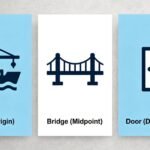
It helps to picture the full journey. Your goods leave your China factory or supplier and travel to the forwarder’s origin warehouse or consolidation point near the port. There your cargo is packed into the shared container alongside other shipments, the container is sealed and loaded onto the vessel, and it sails to a main European port. On arrival, the container is opened, your cargo is separated out, cleared through customs, and delivered to your door.
In a solid Europe sea freight groupage service, your cargo is tracked as its own identifiable unit from origin to destination. Good operators give you a reference number and keep you informed at each milestone. The practical lesson: because your shipment is co-loaded with others, the container only departs when it is reasonably full or when the scheduled consolidation closes. That is why groupage transit times are quoted as a range, and why choosing a forwarder with frequent, regular sailings on your lane matters.
Knowing these mechanics also helps you plan your lead time correctly. Because the sea leg, the clearance, and the final delivery each sit on their own timeline, a well-run Europe sea freight groupage service gives you a transparent picture of each stage so you can set sensible expectations with your own customers. Work backward from your needed delivery date and confirm the milestone milestones with the forwarder before you book. When you understand the pipeline, you stop guessing about when goods will land and instead build a reliable, repeatable schedule around it.
2. Why DDP makes groupage so convenient
2.1 One price, delivered duty paid
The second half of the equation is DDP, or Delivered Duty Paid. In a DDP arrangement, the seller (or the forwarder operating on your behalf) is responsible for delivering the goods to your door, having already handled the freight, the customs clearance, and the duties and taxes. For the buyer, this is the simplest possible import — you receive one delivered price, and the goods arrive at your destination address ready to be received.
When you combine DDP with Europe sea freight groupage, you get the full convenience package: shared container economics on the sea leg, plus a forwarder who sorts out import formalities and final delivery. Many sellers see groupage under DDP as the ideal painless way to serve European buyers. The appeal is simply stated: with Europe sea freight groupage and DDP combined, they quote a landed price to their customer, the forwarder handles the rest, and there are no surprise customs bills at the far end. It is a genuinely smooth model when the operator is experienced.
It is worth being precise about what “duty paid” covers so you set expectations correctly. DDP means the commercial freight, import duties and taxes, and delivery to the stated address are included in the package. What matters for you is to confirm the scope with your forwarder in writing, especially coverage of customs formalities and the exact delivery address reach, so that nothing is left ambiguous when the shipment arrives.
2.2 Who bears what responsibility
Because DDP shifts so much responsibility to the shipping side, you want to work with someone who genuinely owns the process rather than passing it around. In practice, a good forwarder’s DDP groupage product includes: booking the sea freight, arranging the consolidation, handling import customs clearance in Europe, paying applicable duties and taxes on your behalf, and coordinating the final delivery. You provide accurate commercial information, and the forwarder manages the movement.
This is exactly why a strong Europe sea freight groupage and DDP service is built on trust and documentation. The forwarder is essentially standing in for you at the destination, so your commercial invoice, packing list, and accurate value and description matter more than ever. Get those right, and clearance flows smoothly. Get them wrong, and even the best DDP network will hit friction at customs. As the shipper, your job is clear documentation; the forwarder’s job is everything downstream of that.
It is also worth saying how this changes your own workload. With a proper Europe sea freight groupage and DDP arrangement, you do not need a customs broker in Europe, you do not need a local import team, and you do not need to chase a dozen different vendors for one shipment. The forwarder consolidates that entire chain into a single point of contact and a single delivered price. For a small or mid-size business, that simplicity is itself a major benefit — it lets you focus on selling and stocking rather than on freight administration. The more European destinations you sell into, the more valuable this single-window convenience becomes, and the more you come to rely on Europe sea freight groupage as the backbone of your imports.
3. When groupage beats a full container
3.1 The trade-offs between LCL and FCL
Choosing between full container load (FCL) and groupage is mostly about volume and cadence. If your shipment is large enough to fill a container, FCL is usually simpler and more predictable — your cargo is not handled alongside others, and you control the whole box. But most growing businesses ship partial loads, and that is precisely the sweet spot of Europe sea freight groupage. When your order sits well short of a full container, groupage is how you still benefit from the deep economics of ocean freight while keeping your commitment small and your flow regular.
The trade-offs are nuanced. Groupage can involve slightly longer transit because of consolidation and deconsolidation handling, and your cargo shares the container with others. Against that, groupage lets you ship smaller, more frequent orders, which means lower inventory tied up in transit and more flexibility to respond to demand. For many sellers, that cash-flow and flexibility advantage outweighs the marginal extra handling. The best choice depends on your order pattern, not on any universal rule.
A useful frame: if you are regularly shipping meaningful but partial volumes to the same region, a weekly or twice-weekly Europe sea freight groupage service effectively becomes a steady, reliable pipeline. You can top up stock as sales happen rather than committing to a whole container months in advance. That agility is often the deciding factor for e-commerce and distribution businesses that want to balance cost, speed, and inventory risk. Even when your volumes eventually grow enough for full containers, many sellers keep a groupage lane open for faster, smaller replenishment between bigger loads — the two methods comfortably complement each other, and both are worth having in your toolbox.
3.2 Matching groupage to your sales cycle
Think about how your European demand actually behaves. If it is steady and predictable, you can forecast and either consolidate into fuller loads or ship on a reliable cadence. If it spikes in bursts — promotional peaks, seasonal demand, new product launches — Europe sea freight groupage gives you the ability to move modest volumes quickly without over-committing. That fit with your sales cycle is what makes some sellers rely on groupage year-round.
Beyond the big decisions, groupage is also a great way to test a market. If you are launching in a new European country and do not yet know how much you will sell, committing to FCL volumes is risky. Starting with Europe sea freight groupage lets you test smaller, adjust to demand, and scale up only when you see the actual appetite. It lowers the minimum viable order, which lowers the cost of learning.
There is one more angle worth noting: groupage smooths your cash flow and working capital. Because you can ship smaller, more frequent orders, you are not funding months of inventory sitting in a container between sailings. Instead, you pay for what you ship, sell as it lands, and reorder to match actual sales velocity. This steady, sell-through-friendly rhythm is one reason so many e-commerce operators prefer Europe sea freight groupage over committing to large infrequent loads. It turns incoming stock from a lumpy, expensive bet into a managed, predictable flow that follows demand rather than guesses ahead of it.
4. The documents that make groupage work
4.1 What you must prepare to ship
Despite the shared-container mechanics, your documents are your own, and they are the foundation of smooth clearance. The most important are your commercial invoice and packing list, describing accurately what you are shipping, its value, and how it is packed. Alongside these, for most Europe sea freight groupage shipments you will have a bill of lading issued for your consignment, even though it shares a container.
Accuracy is everything here. Customs in Europe reads your declaration to classify your goods and determine duties, so a clear, truthful description and a realistic declared value prevent both delays and compliance headaches. If you are shipping via DDP, the forwarder builds the import declaration from the same documents, which is why consistency between your package and your paperwork is non-negotiable. Prepare clean documents once, and the whole process is smoother.
A practical habit for anyone using Europe sea freight groupage repeatedly is to build a small template library: one standard commercial invoice layout, one packing list format, and a reusable reference sheet for your common products with their descriptions and classifications. Once your documents are consistent, your forwarder’s team processes them faster and mistakes drop sharply. It also makes it trivial to send a correct set on short notice when a consolidation cutoff is close. The up-front effort of standardising your paperwork pays for itself in every subsequent shipment.
4.2 Special cases and what to flag early
Some goods need extra attention before they can travel in groupage. Batteries, liquids, powders, and other potentially dangerous goods may require additional documentation or may be restricted on certain services, including in a shared container. If your product is in any regulated category, disclose it at the very start — your forwarder can then confirm whether standard DDP groupage is the right vehicle or whether special handling is needed.
The message here is simple: when you explore Europe sea freight groupage, the conversation about your goods should happen before you confirm the booking, not after your cargo arrives at the consolidator. A few honest notes about your product now prevent a much larger problem later. Experienced forwarders value this transparency, because it lets them route your cargo correctly, protect the shared container, and keep your timeline intact.
5. Choosing a groupage and DDP partner
5.1 What to verify before you book
Not all groupage is equal, and the forwarder’s network is the difference between smooth and painful. Before you commit to a Europe sea freight groupage provider, verify how frequently they consolidate on your lane, which European ports and destinations they serve well, and how their deconsolidation and final delivery are organized. Frequent departures mean less waiting; good destination coverage means predictable final delivery.
You should also confirm that the forwarder genuinely operates the DDP service rather than merely reselling it, and that they can show you a clear, written scope of what “delivered duty paid” includes for your destination. Ask how they handle customs checks, how they keep you updated through the transit, and what happens if a shipment is delayed. The quality of these answers tells you more than any rate sheet about how your cargo will be treated.
It is also wise to confirm their track record on the exact route you care about. A forwarder who can point to recent, successful Europe sea freight groupage and DDP deliveries to your target country, and who can describe how they handle that market’s specific requirements, is a safer bet than one who only speaks in generalities. Ask how many groupage sailings they run to your region each week and how often they actually hit the quoted transit. Concrete, checkable claims are the strongest signal of a partner who will protect your cargo and your reputation.
5.2 The value of a specialist on your lane
There is a real difference between a generalist who occasionally moves groupage to Europe and a forwarder who runs a focused Europe sea freight groupage program with regular sailings, established destination relationships, and a proven DDP process. The specialist has staff who handle European clearance daily, know the current rules, and can resolve exceptions quickly instead of learning them as they go.
That specialist advantage is especially valuable under DDP, where the forwarder acts on your behalf at the destination. A focused team moves your cargo on familiar lanes, keeps your deliveries reliable, and quietly handles the quirks that would otherwise become your problem. For sellers who ship to Europe as a core part of their business, that reliability is not a luxury — it is the entire point of choosing Europe sea freight groupage and DDP in the first place.
6. Pitfalls to avoid and a simple checklist
6.1 Common mistakes that cause delays
Three mistakes cause most Europe sea freight groupage problems. First, vague or inaccurate documentation, which slows customs and can trigger extra scrutiny. Second, booking too close to a departure without confirming the consolidation cutoff, which adds waiting. Third, failing to disclose regulated items until late, which can force repacking or a service change. Each is avoidable with a little planning ahead.
A fourth, subtler issue is mismatched expectations about transit time. Because groupage departs on the consolidator’s schedule, transit is quoted as a range and varies with how quickly the container fills and how the sailing lines run. Build that range into your planning rather than assuming a fixed date. Understanding this from the start is what separates smooth groupage users from frustrated ones. When you treat transit expectations honestly, a Europe sea freight groupage program becomes far easier to rely on for stock planning.
6.2 A pre-booking checklist for groupage
Before you confirm any Europe sea freight groupage booking, run a quick list. Confirm your goods are disclosed and appropriately documented, including any regulated items. Confirm the destination coverage and the exact delivery address and scope, and what DDP does and does not include there. Confirm the consolidation cutoff and the expected transit range. Confirm how you will be kept updated and who handles customs at the far end. Confirm the forwarder’s experience running groupage plus DDP on your lane. Answering these cleanly at booking time prevents almost all downstream friction.
Conclusion
Europe sea freight groupage is, at its heart, a smart way to use ocean shipping economics without owning a full container. By sharing space with other shippers, you keep freight efficient, keep inventory flexible, and make partial-load shipping to Europe genuinely practical. Add DDP on top, and you get a single, delivered, duty-paid service where the forwarder handles clearance and final delivery, and you receive your goods at the door without customs surprises.
None of this depends on secret knowledge. It depends on a few clear choices: match groupage to your volumes and sales cycle, prepare accurate documents, disclose your goods honestly, and choose a forwarder who runs a focused Europe sea freight groupage and DDP service on your lane. Do that, and groupage becomes a dependable, repeatable part of your European operation — one that keeps your goods moving, your costs sensible, and your customers reliably stocked.
Start small and prove the process before you scale. Send an initial modest shipment through your chosen Europe sea freight groupage and DDP service, watch how the documentation, transit, and final delivery actually perform, and learn the rhythm before you commit larger volumes. That first shipment is the most valuable lesson you can buy — it shows you exactly what your partner does well and where you need to add margin, so you can refine your planning and build on a foundation that works. When you are ready to compare options, a forwarder who asks you about your volumes, your destinations, and your products before quoting is the one who will actually take care of your cargo.