





In this guide
- What Happens in a China Consolidation Warehouse Before Loading? The Short Answer
- How Does Receiving Work When Suppliers Deliver to a Consolidation Warehouse?
- What Does Cargo Inspection Before Loading in China Actually Cover?
- How Are Multiple Suppliers’ Goods Sorted, Palletized and Stuffed Together?
- What Documents Are Prepared Before the Shipment Leaves the Warehouse?
- LCL vs FCL: When Does Consolidated Shipping Beat a Full Container?
- FAQ: Common Buyer Questions About China Consolidation Warehouses
- Ready to Move Your Consolidated Shipment? What to Send Us
- Further reading
- References
What Happens in a China Consolidation Warehouse Before Loading? The Short Answer
A China consolidation warehouse is where loose deliveries from several suppliers are received, inspected, measured, sorted, palletized and documented so that multiple orders leave as one compliant shipment. The work moves through four stages — receiving, inspection, consolidation and palletizing, documentation — before anything is loaded, and each stage exists to catch a specific class of error while it is still a phone call to fix. For an importer buying from two or more suppliers, this facility is where separate factory outputs become a single, clean set of manifests, marks and pallet stacks that destination customs and the final delivery leg can process without surprises.
How Does Receiving Work When Suppliers Deliver to a Consolidation Warehouse?
Receiving is where a China consolidation warehouse takes over accountability from the supplier, and it follows a fixed sequence.
First, every inbound delivery gets a shipment ID tied to the buyer’s booking the moment it reaches the dock. That ID follows the cargo through every later step, so any carton can be traced back to the factory that sent it and the order it belongs to.
Second, the dock team counts cartons against the supplier’s delivery note and packing list. A short-ship, an over-delivery or crushed outer packaging is recorded on the spot, with photos attached to the shipment file. A mismatch caught here is fixed with a call to a factory in the same industrial cluster; the same mismatch found after the container is sealed means unstuffing, re-counting and re-work.
Third, each piece is weighed and measured. Gross weight, length, width and height go into the warehouse system, and this data drives everything downstream: the load plan, the pallet pattern, the space the cargo occupies in an LCL consignment, and the figures that later appear on the consolidated packing list. If the supplier’s stated dimensions and the actual measurements disagree, the warehouse record is what the export and import declarations end up reflecting — so the correction happens before the paperwork, not after it.
What Does Cargo Inspection Before Loading in China Actually Cover?
Inspection at this stage is a cargo-handling check, not a product quality audit. Inspectors work through a defined list:
- Outer carton condition — crush damage, damp marks, tears or punctures that would not survive a second handling cycle.
- Shipping marks and label accuracy — destination marks, carton numbers in the format “x of y”, and consistency between labels, packing list and booking.
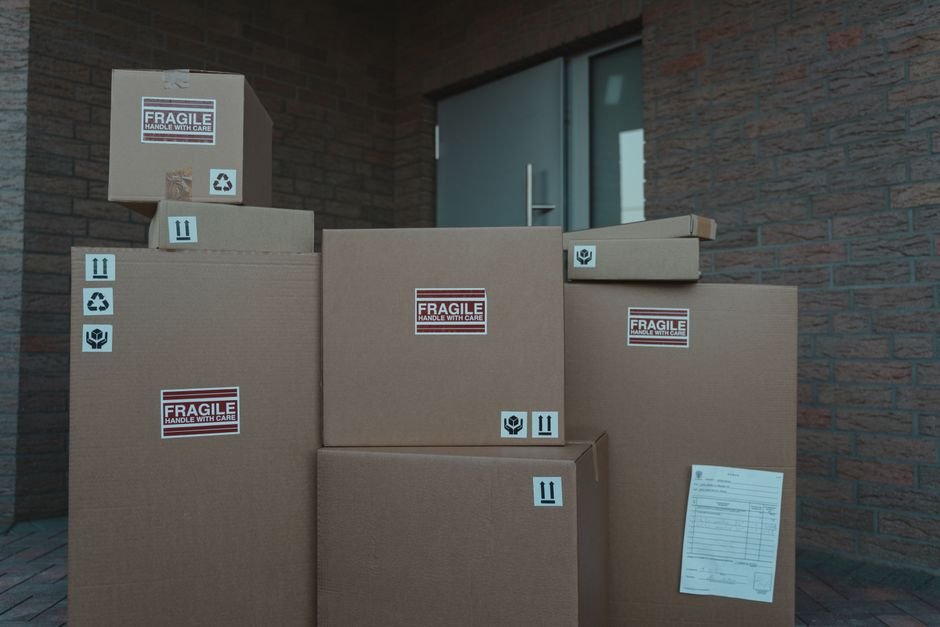
- Handling symbols — fragile, this-way-up and keep-dry icons present and legible on the correct faces of each carton.
- Quantity against the packing list — piece count, pallet count and units per carton.
- Photo evidence — a set of images covering stacked goods, label close-ups and any weak points, sent to the buyer before loading is authorized.
What this check cannot catch matters just as much. Internal product defects, missing retail packaging inside a sealed carton, or wrong specifications hidden inside unmarked boxes are invisible to a warehouse inspection; that level of checking is a separate third-party product inspection, arranged before the goods are released for loading. Buyers who understand this split set accurate expectations and do not assume that a clean inspection report equals a clean product audit.
How Are Multiple Suppliers’ Goods Sorted, Palletized and Stuffed Together?
This is the stage that defines the shipment. Goods from different factories are grouped by destination and by buyer, then sorted inside each group: heavy cartons separated from light ones, fragile units pulled out for dedicated handling, and any cargo with strong odor or leakage risk isolated from textiles, food-contact goods and electronics.
Palletizing follows stacking rules rather than habit. Heavy items sit at the bottom of the stack, cartons stay inside the pallet footprint without overhang, and corner protection goes on wherever strapping would dig into the outer layer. Wood packaging must comply with ISPM 15, the international standard for treated wooden pallets and crates administered by the International Plant Protection Convention (IPPC); non-compliant wood packaging is a common reason cargo gets stopped or reworked at export.
Loading then splits by service type. For FCL, the warehouse builds a stuffing plan before the container arrives: loading sequence matched to the unloading sequence at destination, heavy pallets placed over the axle line, weight spread evenly across the floor so the container does not arrive with a shifted load or fail a weighing check. For LCL, cargo is loaded loose into a shared container, with each consignment segregated and mapped so the de-consolidation warehouse at destination can split it without a full dig-out.
(Image: warehouse floor plan style illustration showing goods from suppliers A/B/C being sorted into labeled pallet stacks and loaded into one container.)
What Documents Are Prepared Before the Shipment Leaves the Warehouse?
The paperwork a China consolidation warehouse generates at this stage is the foundation the rest of the shipment builds on.
A consolidated packing list is issued per buyer, breaking the shipment down carton by carton — dimensions, gross weight, marks and contents at the level the destination leg needs. A commercial invoice cross-check follows: declared values on the invoice are compared against the order records behind each consignment, because the customs value assessed at destination starts from this paperwork, and a mismatch found in the warehouse is a revision while the same mismatch found at customs is a hold.
Carton marking and labeling are then completed to the standard the shipment requires — destination marks, carton sequence numbers and handling symbols applied where they are missing — since labels that match documents are what keep later disputes short.
Finally, the warehouse data feeds the filings that follow. For US-bound sea freight, the ISF filing draws on the container-level details recorded here; the export declaration lodged from China reflects the weights and quantities measured at the dock. The General Administration of Customs of China publishes the export declaration requirements these filings must satisfy, and accurate warehouse records are what make those requirements straightforward to meet. The wider document checklist for a full import is covered separately.
LCL vs FCL: When Does Consolidated Shipping Beat a Full Container?
The answer depends on volume, sensitivity and how much loading control the cargo needs.
| Factor | Consolidated LCL | FCL |
|---|---|---|
| Cargo volume | A few pallets up to part of a container | Enough cargo to fill most of a container |
| Loading control | Warehouse decides the mix; cargo shares the box with other consignments | Sealed at origin with only your cargo inside |
| Handling touches | More: receive, sort, load, de-consolidate, reload for delivery | Fewer: one stuffing, one stripping |
| Typical risk points | Mixing damage, odor transfer, waiting for other consignments to complete the load | Loading quality depends on who stuffs; a poorly secured load can shift in transit |
| Fits best | Buyers ordering from 2+ suppliers, replenishment shipments, mixed product ranges | Uniform, fragile-sensitive or high-cube cargo moving on one route |
The row that decides most cases is handling touches. Cargo that tolerates extra handling and shares space well is a natural fit for consolidation; cargo that cannot be handled repeatedly — glass, machinery with calibrated parts, goods with odor sensitivity — usually justifies a dedicated container even when the box is not full.
FAQ: Common Buyer Questions About China Consolidation Warehouses
How long can goods be stored before loading? Storage length is governed by the free-storage terms written into your booking, and each warehouse and service sets its own terms — so the clause on your quotation is the one that applies to your cargo, not any industry-wide norm. Before placing orders, get two points confirmed in writing: when the free-storage clock starts (for example, at dock arrival or at completion of receiving) and what the charge basis is once the free period ends. The stakes are practical: a shipment held in storage for weeks while one supplier delays ties up handling capacity and pushes the cargo past the sailing you planned for, so match the storage terms against the longest supplier lead time in your order set.
Can I inspect goods remotely? Yes. Photo and video evidence at receiving is standard practice, live video calls during the inspection walk-through can be scheduled, and independent third-party inspectors can attend on your behalf before loading is authorized.
What happens if one supplier’s goods arrive damaged? Damage is recorded at receiving with photos and a written note against that supplier’s delivery, and the affected pieces are held separate. The buyer then chooses: ask the supplier to re-deliver, load as-is with the damage documented, or exclude the pieces from the shipment. Nothing gets loaded silently.
Who is liable in the warehouse, and when does risk transfer under Incoterms 2020? While cargo sits in the warehouse, liability follows the warehouse terms of the booking and the commercial terms between buyer and supplier. Under Incoterms 2020 FOB, CFR and CIF, risk transfers when the goods are placed on board the vessel — everything before that, including the warehouse leg, sits on the seller’s side of the risk line. Under DDP, the seller arranges import clearance and pays the duties at destination; under DAP, the buyer handles import clearance and pays the duties, with the seller delivering to the agreed destination.
(Image: close-up photo-style illustration of a carton with correct shipping mark labels and handling symbols being scanned.)
Ready to Move Your Consolidated Shipment? What to Send Us
The faster a China consolidation warehouse can build a load plan, the cleaner the shipment runs, and the plan starts with a few concrete details: item categories and any restrictions, carton count with dimensions and weights, the supplier locations your goods will come from, and the destination with the delivery terms you want at the far end. With those in hand, the receiving IDs, inspection scope, pallet pattern and document set can all be mapped before the first factory ships. Send us the cargo details and we will map the route, paperwork and handover.
Further reading
References
- ICC — Incoterms Rules — Official Incoterms 2020 rules publisher
- U.S. Customs and Border Protection — Official US import regulations and duty rates