





For most small and mid-sized importers moving LCL or mixed cargo from China in May 2026, the DDP vs DAP China Consolidation question comes down to one decision: who is willing to be the importer of record? DDP keeps export haulage, import clearance, duties and last-mile delivery with one accountable provider, while DAP hands the import entry, the duty and the import VAT to the buyer even when the goods arrive at the same address.
- Choose DDP when you have no in-house customs capacity, a fixed retail launch date, or several suppliers feeding one delivery address.
- Choose DAP when you already work with a broker in the destination country and can act as importer of record yourself.
- Use consolidation when several suppliers are moving cargo too small to justify a full container.
- Recheck receiving windows, sailing cutoffs and peak-season allocation before you book.
- Verify the agent’s UK, French and Belgian compliance coverage before tendering cargo.
DDP vs DAP China Consolidation: the risk split that actually matters
The difference between DDP and DAP when shipping from China is who is responsible for import clearance, duties, import VAT and local release, not who physically carries the goods.
Under Incoterms 2020, DDP means the seller delivers the goods cleared for import and accounts for duties, taxes and import formalities at the named destination. DAP means the seller makes the goods available at that destination, but the buyer handles import clearance, accounts for duty and import VAT, and manages terminal handling and local release. The physical delivery point can be identical; the legal and cash responsibility is not.
Do not confuse carriage with transfer of risk. For port-to-port FOB, CFR or CIF movements, risk passes when the goods are loaded on the vessel in China. Under CFR and CIF the seller may pay the ocean carriage to the destination port while risk still passes at loading. In a DDP vs DAP China Consolidation move, risk follows the named place of delivery, while import-clearance responsibility remains the term’s decisive feature.
Most disputes begin when a DAP booking looks tidy at origin and the destination side then needs deconsolidation, storage during a customs examination, demurrage, or a correction to the commercial invoice. DDP removes that ambiguity, but only if the seller or agent can lawfully act as importer and classifies the goods correctly. A DDP label sitting on the wrong HS code still ends in post-clearance recovery and delayed replenishment.
Consolidation versus direct shipping: what changes at the warehouse
A DDP vs DAP China Consolidation plan starts with a simpler operational question than most buyers expect: who should control the moment the cargo changes hands?
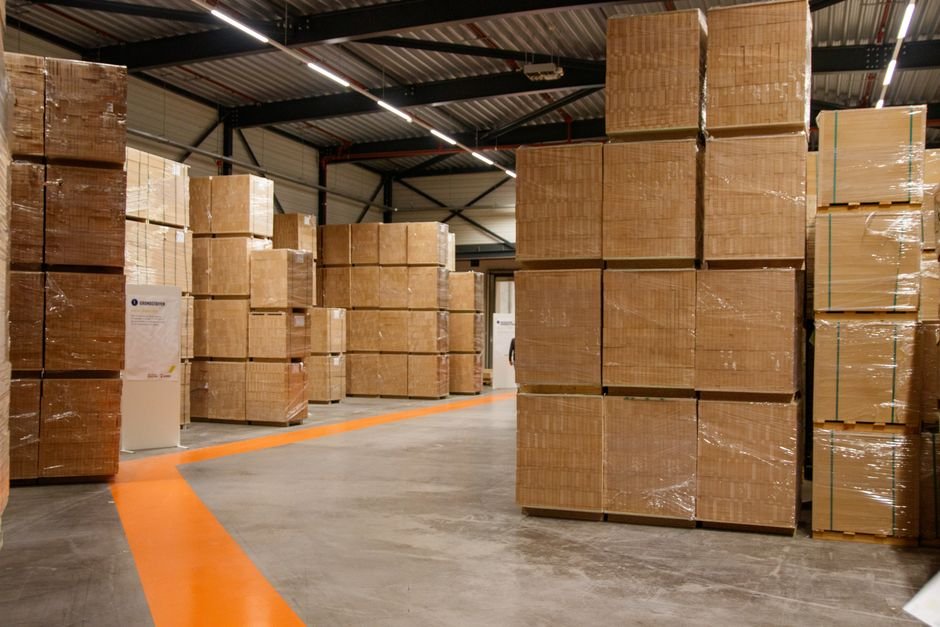
Consolidation means your cargo shares a container with other shippers. The forwarder receives cartons at a China warehouse, checks quantity and packaging against each supplier’s packing list, labels the cartons, palletizes where needed, and loads one export shipment. Direct FCL means one container is packed for one shipper, usually at the supplier’s factory, and stays sealed until destination.
The trade-off is dwell time against handling. Consolidated cargo waits for the receiving cutoff and for the last supplier to deliver; a late supplier can push the whole booking to the next sailing unless the forwarder splits the shipment. Direct loading removes the warehouse stop but adds empty container positioning, factory loading supervision, and container return discipline at destination.
Consolidation pays off operationally when you buy from several suppliers, when each purchase is too small to fill a container, or when you want one export declaration and one set of documents instead of four. Direct FCL suits a single supplier with steady volume, cargo that must stay sealed for compliance reasons, or oversized pieces that cannot be re-handled safely.
Ask three questions before you choose: when is the receiving cutoff, what happens if one supplier is late, and who inspects the cartons before loading. A forwarder who answers those in writing is easier to hold to a schedule than one who only confirms the sailing.
UK, France and Belgium: where terms meet compliance
For UK, French and Belgian destinations, DDP is usually the safer choice for first-time or resource-constrained importers because it places classification, import entry and tax handling with one accountable provider.
If you are looking for a reliable shipping agent in China for UK imports, verify the full DDP chain rather than the headline promise. The agent should explain who will be importer of record, how UK VAT is treated, which commodity codes are used, how duty is established, and whether proof of customs clearance and delivery is retained. EORI details, product compliance marks and commercial invoices must agree with each other, because a mismatch is what stops a shipment at the border.
A DDP move from China to France should show, in writing, origin pickup, China consolidation, ocean or multimodal carriage, import clearance, French duty and tax handling, terminal handling and last-mile delivery to the named address. It should also state the Incoterms 2020 version, the delivery window, and who is responsible if customs asks for additional documents.
When you ship commercial pallets from China to Belgium by sea, pallet dimensions, gross weight, ISPM 15 markings and lift-on/lift-off requirements decide whether consolidation is practical. Floor-loaded cartons reduce origin handling but raise damage exposure; palletization slows loading slightly and speeds up destination handling. Under DAP the Belgian consignee controls release; under DDP the seller’s agent must clear import before delivery to Antwerp, Ghent, Brussels or an inland distribution centre.
On all three lanes, DDP vs DAP China Consolidation decisions should be modelled on the same cargo weight, cube, delivery postcode and invoice value, so that only the term changes between scenarios.
DDP and DAP comparison table
The table below summarises the DDP vs DAP China Consolidation choice as of 2026-05 and shows where a shared warehouse changes the day-to-day work.
| Factor | DDP | DAP | Consolidation check |
|---|---|---|---|
| Import clearance | Seller or agent clears import | Buyer clears import | Confirm importer of record and tax representative |
| Duties and import VAT | Seller or agent accounts for them | Buyer accounts for them | Verify commodity code and VAT treatment |
| Physical delivery | Goods made available at named destination | Same delivery concept possible | Check booking, access and unloading rules |
| Risk transfer | Follows named delivery point; separate from clearance | Follows named delivery point | For FOB/CFR/CIF, risk passes on loading in China |
| Documentation owner | Seller or agent prepares the import entry | Buyer prepares or instructs the entry | Agree who corrects a rejected declaration |
| Failure mode | Wrong classification creates post-clearance recovery | Uncleared goods sit in storage | Set an escalation contact at the warehouse |
| Best fit | SMEs, new lanes, retail launch dates | Experienced importers with brokers | Match cube, pallet count and supplier readiness |
Use the table as a tendering checklist, not as a substitute for the customs ruling in your destination country. If two offers use different delivery points or different document responsibilities, normalise them before you compare.
Frequently asked questions
The five entries below cover the questions that come up most often on DDP vs DAP China Consolidation shipments of LCL, pallets and mixed supplier cargo to the UK, France and Belgium.
Q: Who is the importer of record under DDP?
A: Under DDP the seller, or the agent acting for the seller, clears the goods for import, which normally makes that party the importer of record for the entry. The buyer should still confirm who holds the EORI or EU customs number, who receives the clearance evidence, and what happens if the authority queries the declared value or classification.
Q: Does risk transfer at the same point under DDP and DAP?
A: The physical delivery point can be the same, but clearance responsibility differs. For FOB, CFR or CIF ocean terms, risk transfers when the goods are loaded on the vessel; CFR and CIF can include seller-paid carriage to destination despite that earlier risk point. Under DAP or DDP, assess risk at the named destination while separately checking who clears import.
Q: When does warehouse consolidation beat direct shipping?
A: It usually beats direct LCL when you buy from several suppliers and each purchase is too small to fill a container, because you gain one export declaration, one set of documents and one receiving checkpoint. It stops making sense when a single supplier can fill a container, when the cargo must stay sealed, or when the receiving cutoff cannot absorb a late delivery.
Q: What should a France DDP file include?
A: Commercial invoice, packing list, commodity codes, EORI and VAT details, product compliance documents, delivery address, the Incoterms 2020 version, and a clear statement of who handles duties, import VAT and destination handling. A DDP file is incomplete if import clearance is only implied rather than assigned.
Q: What is the 2026 peak-season cutoff?
A: For the current pre-peak programme, the economy consolidation cutoff is published with each sailing and confirmed at booking. Cargo tendered after that date moves to the next departure or stands by for allocation. Ask for the cutoff in writing at the same time you confirm the delivery window, and keep the two documents together.
Next step: fix the clearance boundary before booking
As of 2026-05, the practical DDP vs DAP China Consolidation rule is simple: use DDP when predictability and compliance ownership matter more than controlling every customs step, and use DAP only when the importer has a proven broker and the systems to act as importer of record.
For your next booking, check the receiving cutoff, the sailing schedule, pallet dimensions, commodity codes and every destination responsibility before you approve the proforma. For UK imports, French distribution-centre deliveries and Belgian sea pallets, ask for two scenarios built on identical cargo data and award the lane on risk-adjusted readiness rather than on the tidiest-looking document set. Send us your cargo details and we will map the route, paperwork and handover.