





A Reliable China UK Shipping Agent should be measured by control rather than by one booking figure. A China-UK door move can involve factory handover, export declaration, vessel or rail scheduling, port handling, UK customs entry, duty and value-added tax (VAT) treatment, and final-mile appointment booking. When those tasks are split across unconnected brokers, a missing commodity code or a late commercial invoice can turn a clean booking into storage and demurrage exposure. The practical conclusion is that DDP (Delivered Duty Paid) is suitable when the importer wants the seller or forwarder to manage import clearance, while DAP (Delivered at Place) is suitable when the buyer can file imports and recover VAT correctly; consolidation earns its place only when the warehouse step is planned rather than bolted on.
Conclusion: Buy Accountability, Then Match the Incoterm to the Importer
The practical conclusion is simple: small and midsize importers should secure one accountable door-to-door provider, then choose DDP or DAP according to which party is properly equipped to compliantly act as importer. A slim port-to-port booking does not prove a well-run door move if UK customs, haulage, pallet handling and release sit with four different parties. For a small and midsize enterprise (SME), TrustFreight aligns booking, documentation, customs status, and delivery planning before cargo leaves the Chinese warehouse.
DDP is not automatically the right term for every shipment. It is useful when the UK buyer lacks an established customs process or wants one predictable delivered arrangement, but the written scope must state who handles duty, import VAT, clearance and terminal handling. DAP can be preferable when the buyer has a UK Economic Operator Registration and Identification (EORI) number, a customs broker, and a clear VAT recovery position. Under both terms, confirm the named delivery place and unloading responsibility in writing.
Why a Reliable China UK Shipping Agent Is the Move’s Control Tower
Five control points determine whether a shipment stays predictable, and a reliable China UK shipping agent is judged on how it runs them: booking confirmation, cargo readiness, document accuracy, customs readiness, and final-mile coordination. A reliable agent does not wait for the supplier to send paperwork after cutoff; it checks booking cutoffs, container load plans, invoice data, and customs instructions while production is still being completed.
At origin, the agent should confirm whether cargo is floor-loaded, palletized, hazardous, oversized, or stackable. Those facts affect container selection, wharf acceptance, lifting charges, and UK delivery access. At destination, the agent should separate carrier haulage from merchant haulage, identify empty return rules, and warn the importer about detention and demurrage windows before they become a problem. Free time varies by carrier and terminal and should be written into the booking file.
Schedule protection also depends on exception communication. If a vessel blank sails, rolls, or misses a transshipment connection, the agent should present the revised routing, impact on the UK delivery window, and any change to the delivery window rather than leave the buyer to track public container status. This is especially valuable for repeat SME importers that cannot maintain a separate traffic office in China.
What Is the Difference Between DDP and DAP When Shipping from China?
The core difference between DDP and DAP when shipping from China is import responsibility: DDP makes the seller responsible for import clearance, duties, and import VAT, while DAP places those obligations on the buyer. Both terms can be used for door-to-door delivery, but they allocate compliance risk differently. Under Incoterms 2020, DDP (Delivered Duty Paid) means the seller clears goods for import and delivers them at the named place, whereas DAP (Delivered at Place) means the goods arrive ready for unloading but the buyer handles import formalities.
| Point | DDP (Delivered Duty Paid) | DAP (Delivered at Place) |
|---|---|---|
| UK import declaration | Seller or seller’s agent | Buyer or buyer’s broker |
| Duty and import VAT | Seller’s responsibility under the written scope | Buyer’s responsibility |
| Delivery point | Named UK place after import clearance | Named UK place, with clearance controlled by buyer |
| Risk at delivery | Goods placed at buyer’s disposal ready for unloading | Goods placed at buyer’s disposal ready for unloading |
| Main buyer benefit | Lower administrative burden | Direct control of import entry and VAT |
| Main check | Confirm importer-of-record route and tax treatment | Confirm broker, EORI, and arrival-notice process |
Risk under DAP and DDP is not determined by who pays ocean freight. It passes at the named destination when the goods are placed at the buyer’s disposal on the arriving means of transport and ready for unloading. A DDP scope should therefore state the customs territory, the Incoterms version, the named place, who accounts for duty, the VAT treatment, and every exclusion. If the seller cannot comply as importer in the destination country, DDP may be operationally difficult even if the commercial invoice says DDP.
China Warehouse Consolidation vs Direct Shipping: What Changes
A China warehouse consolidation vs direct shipping comparison should cover four operating stages: origin collection, warehouse handling, main carriage, and destination delivery or clearance. Comparing only the ocean leg produces a false picture, because consolidated groupage adds warehouse handling, minimum volume rules and destination documentation that never appear on a carrier booking.
Consolidation is useful when several suppliers send small batches, when cargo is less than a full container, or when the buyer wants one combined shipment from a Chinese warehouse. The provider receives cartons, checks counts and marks, stores loads temporarily if needed, and loads them into a less-than-container load (LCL) consolidation or, for larger volumes, a full container load (FCL). For repeat orders, origin consolidation can reduce repeated destination handling and make one commercial delivery easier to schedule.
Direct shipping is often more predictable when one supplier has enough cargo to fill a container or when production and customs documents are already complete. It removes one warehouse touchpoint but can leave the buyer managing multiple supplier deliveries, separate export documents, and less control over carton marks. A valid comparison should record who collects, who handles, who carries and who clears, then test each stage against your own cargo volume and delivery date rather than against a single headline figure.
Incoterms 2020: Where Risk Actually Moves
Three outdated assumptions create avoidable disputes: using an obsolete loading boundary as the risk point, treating CIF or CFR delivery to the destination port as destination risk, and assuming DAP includes import duty. Under Incoterms 2020, FOB, CFR and CIF transfer risk when the goods are loaded on board the vessel at the port of shipment.
The division of charges and the division of risk are separate under CFR and CIF. The seller contracts and pays carriage to the named destination port under both terms, but risk still passes when the goods are loaded on board at the Chinese port. Under CIF, the seller also purchases insurance for the buyer’s sea transit, normally at minimum cover, while CFR does not require the seller to buy insurance. A UK buyer purchasing CFR or CIF should therefore arrange its own cover from the loading point if broader protection is required.
For door moves, DAP and DDP are more specific about destination delivery, but they do not change the import-clearance distinction automatically. DAP leaves import clearance to the buyer; DDP moves it to the seller. Getting this wrong can delay clearance even when freight and booking were performed correctly.
UK Import Clearance: Three Data Sets That Determine Border Velocity
UK customs readiness depends on three data sets, and this is where a reliable China UK shipping agent earns its keep: commodity classification, importer identity, and shipment evidence. The commodity code determines duty treatment, restrictions and licence requirements; the EORI number and customs procedure code (CPC) identify the importer and declaration basis; the invoice, packing list, transport document, and origin evidence support the declared value and origin claim. A reliable shipping agent in China for UK imports should verify these data before cargo cutoff, not after the vessel has sailed.
UK importers should also confirm how import VAT will be handled and whether any preferential origin statement is supported by the supplier. DDP arrangements require particular care because the seller or its representative must have a lawful route to act as importer and account for UK VAT. If the buyer is VAT-registered and normally recovers input tax, DDP can obscure the invoice trail unless the commercial and tax documents are aligned from the start.
The freight file should record the commodity code applied, the import VAT treatment, and any licence or product-compliance reference. No forwarder should confirm a DDP delivery plan without settling commodity classification and delivery address first, because controls vary by product and by destination.
Moving Commercial Pallets to Belgium and DDP Deliveries to France
The same Incoterms logic applies when you ship commercial pallets from China to Belgium by sea with a reliable China UK shipping agent at the origin end or plan a DDP delivery from China to France. Belgium is an entry point into the European Union (EU), so the importer needs an EU EORI number, an EU customs declaration, and compliance with EU VAT and safety-security rules. Under DAP, the buyer or its EU broker clears the pallets; under DDP, the seller’s side manages import clearance before delivery to the named Belgian address.
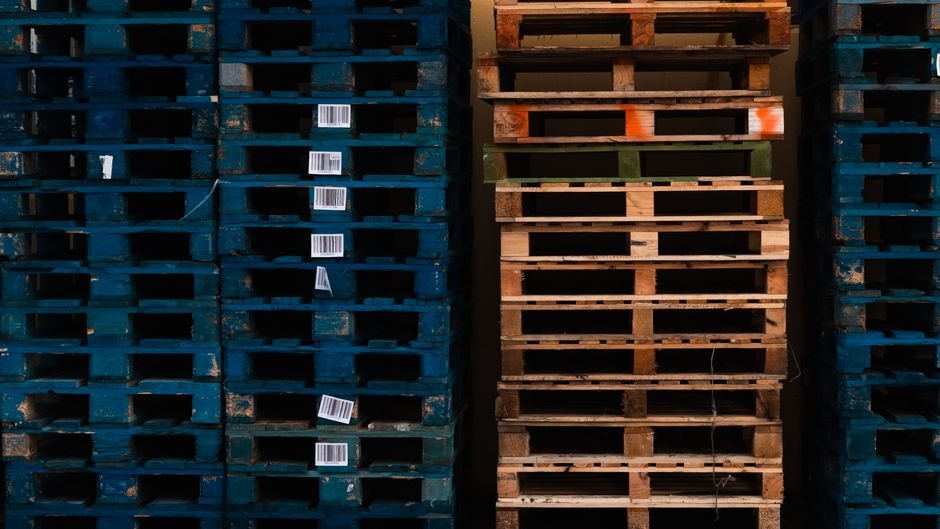
Palletized sea freight needs accurate dimensions, gross weight, stackability, and packaging certification. Wood packaging should meet ISPM 15 (International Standards for Phytosanitary Measures No. 15) marking requirements where applicable, and commercial pallets should be suitable for repeated handling in LCL groupage, container unloading, and final-mile liftgates or loading bays. If pallets are non-standard, overheight, or double-stacked without protection, the agreed handling plan may change.
For France, a DDP delivery plan should name the delivery place, identify the importer-of-record route, and state who handles French import VAT, duty, customs entry and final-mile unloading. DDP can simplify delivery to a French warehouse or fulfilment location, but the plan is only credible once commodity codes, cargo description and delivery conditions are confirmed.
FAQ
Four questions cover most Incoterms, consolidation and customs decisions that a reliable China UK shipping agent should answer before booking for China-Europe shipments. The answers below reflect Incoterms 2020 and should be checked against the actual cargo and destination country.
Q: Does DDP mean every destination charge is included? A: DDP means the seller is responsible for import clearance and duties, but the written scope must separately confirm import VAT, terminal handling, delivery, unloading and excluded permits. A written scope is essential.
Q: Who clears customs under DAP? A: The buyer clears imports and pays duty and import VAT under DAP. The seller delivers cargo to the named place on the arriving transport ready for unloading, but import formalities remain with the buyer.
Q: When is warehouse consolidation the better operational fit? A: When several suppliers ship small batches, when the cargo is well below a container load, or when you want one combined delivery. It adds an origin handling step and a shared loading schedule, so it fits mixed, non-urgent cargo better than a single sealed container.
Q: When does risk transfer under FOB, CFR, or CIF? A: Under Incoterms 2020, risk transfers when the goods are loaded on board the vessel. CFR and CIF put carriage to the destination port on the seller, but that is a division of charges, not a later risk point.
A Reliable China UK Shipping Agent should reduce ambiguity by connecting origin handling, carriage, customs responsibility and final delivery in one plan. SME importers should choose DDP when they want the seller’s side to manage import clearance and DAP when they can control compliance themselves, and they should compare consolidation against direct shipping on handling steps and schedule risk rather than on a single figure. For China-UK, Belgium pallet or France door delivery, confirm the Incoterms version, named place, documents and tax treatment before booking. Send us your cargo details and we will map the route, paperwork and handover.